In the UK, social drinking is shifting towards healthier, alcohol-free options. Functional beverages, designed with ingredients that promote well-being, are replacing traditional alcoholic drinks in pubs, restaurants, and homes. These drinks cater to modern lifestyles focused on health, productivity, and inclusivity. Brands like IMPOSSIBREW® are leading the way with non-alcoholic beers that mimic the relaxing effects of alcohol without the downsides. With the functional drinks market growing rapidly, this trend is reshaping how Britons connect socially.
Key takeaways:
- Alcohol-free options are gaining popularity due to health and wellness trends.
- Functional beverages include ingredients like L-Theanine and Ashwagandha for stress relief and focus.
- Younger generations are driving this change, with 18% of 18–24-year-olds now teetotal.
- Functional drinks are increasingly available in pubs, restaurants, and retail spaces.
This shift highlights a reimagining of social rituals, offering a healthier, more accessible way to enjoy social moments without compromising well-being.
'Functional drinks' is a new buzzword in the non-alcohol sector
Problems with Alcohol-Based Social Drinking
Alcohol has long been a central part of social life, but it’s increasingly at odds with today’s focus on health and wellness. While it once brought people together, its impact on health and social dynamics is becoming harder to ignore, especially for those looking to prioritise their well-being.
Health Problems from Drinking Alcohol
From the immediate aftermath of a hangover to the long-term risks, alcohol takes a toll on the body in many ways. Hangovers not only sap productivity but also add unnecessary calories to the diet. Over time, regular drinking can lead to serious health concerns such as liver disease, heart problems, certain cancers, and disrupted sleep cycles. Poor sleep, in particular, can leave people feeling drained and less focused, making it harder to stay on top of daily responsibilities. The ripple effect of these issues often extends beyond the individual, influencing social connections and group dynamics.
Social Pressure and Exclusion Issues
In the UK, alcohol is deeply woven into the fabric of social life, which can make it tough for those who choose not to drink. Social situations often come with unspoken (and sometimes spoken) pressure to partake, leaving non-drinkers feeling awkward or out of place. This sense of exclusion can strain friendships and make socialising more challenging. In professional settings, the issue is magnified. Events like office parties, networking mixers, or client meetings often revolve around alcohol, creating added pressure for non-drinkers to explain or justify their choices [2].
How Alcohol Conflicts with Modern Life
The fast-paced demands of modern life don’t always mix well with alcohol. In fact, alcohol consumption in Great Britain hit a historic high in 2004 but has since seen a steady decline, dropping 16% by 2019 [3][4]. This shift reflects a growing awareness of the ways alcohol can hinder mental clarity, energy levels, and overall productivity - qualities that are essential for managing careers, family life, and personal goals.
At the same time, the rise of wellness trends and fitness-focused lifestyles has made regular drinking less appealing. Social habits are also changing, with more people opting for home-based gatherings. Interestingly, this has led to an increase in solitary drinking among older age groups [3]. These shifts highlight how alcohol-centred socialising is becoming less compatible with modern priorities, paving the way for healthier and more functional alternatives in social settings.
How Functional Beverages Are Changing Social Drinking
As the spotlight shifts away from alcohol-centred socialising, functional beverages are stepping in to redefine how people connect. These drinks offer a way to enjoy social moments without the downsides of alcohol, aligning with modern priorities like health and wellbeing.
What Are Functional Beverages?
Functional beverages are non-alcoholic drinks crafted to combine great taste with ingredients that deliver specific benefits. They often include components like adaptogens - herbs believed to help the body handle stress, anxiety, and fatigue - and nootropics like L-theanine and caffeine, which are associated with improved focus and mood. Jordan Bass, CEO and founder of Hop Wtr, explains:
"Consumers are looking for products that do more than one thing for them. So if you can achieve a great taste, but also some functional benefit, you're adding more value." [5]
This dual-purpose appeal positions functional beverages as a healthier alternative to traditional options. With their growing popularity, these drinks are setting the stage for a shift in how UK consumers approach social drinking.
Why Functional Drinks Are Gaining Popularity in the UK
In the UK, functional beverages are resonating with a public increasingly focused on both mental and physical wellbeing. The trend mirrors broader shifts in social habits and priorities, with more people seeking options that align with a balanced lifestyle. For context, functional beverage retail sales in the U.S. exceeded $9 billion in the year ending 30 March, and globally, the market is projected to hit $249.5 billion by 2026 [5].
Mental health awareness also plays a significant role in this shift. Many are drawn to functional drinks for their potential to promote wellbeing without the negative effects of alcohol. Nic Zhou, a managing director and partner at BCG, notes:
"People are drinking [functional beverages] because they want more choices. They want to be able to socialise and look cool, feel part of the group, but not necessarily have to consume alcohol." [5]
Elliott Edge, bartender and manager at Hekate, adds:
"People are curious. It seems like they are tired of relying exclusively on something like alcohol for the moods and feelings they want, which are calmness but also sociability." [5]
These observations highlight a growing demand for inclusive social experiences that don't revolve around alcohol.
Where Functional Beverages Are Making an Impact
Functional beverages are expanding their footprint across the UK, moving beyond retail shelves into a variety of social spaces. High street venues, pubs, and restaurants are increasingly offering these drinks, creating more inclusive environments for patrons. In fact, fruit juices and smoothies are now among the fastest-growing drink categories in the out-of-home market [1].
Foodservice operators are also embracing the trend, adding functional drinks to their menus to cater to a wider audience. Beyond traditional venues, these beverages are becoming a go-to choice for "post night out" scenarios, offering options that help counteract the effects of alcohol [1]. This versatility is helping functional beverages carve out a prominent place in the UK’s social landscape.
sbb-itb-a752bf8
How IMPOSSIBREW® Is Leading the Functional Beer Movement
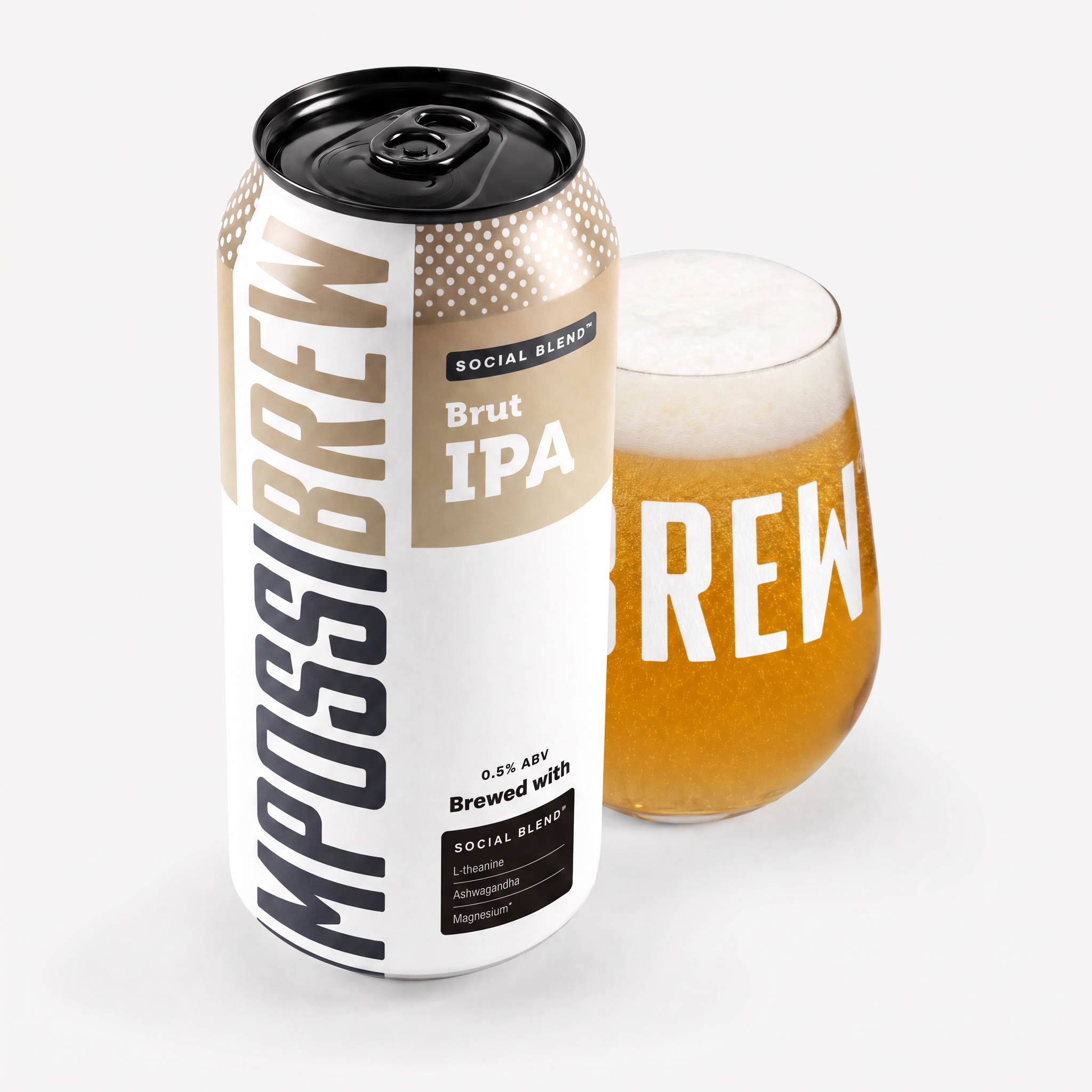
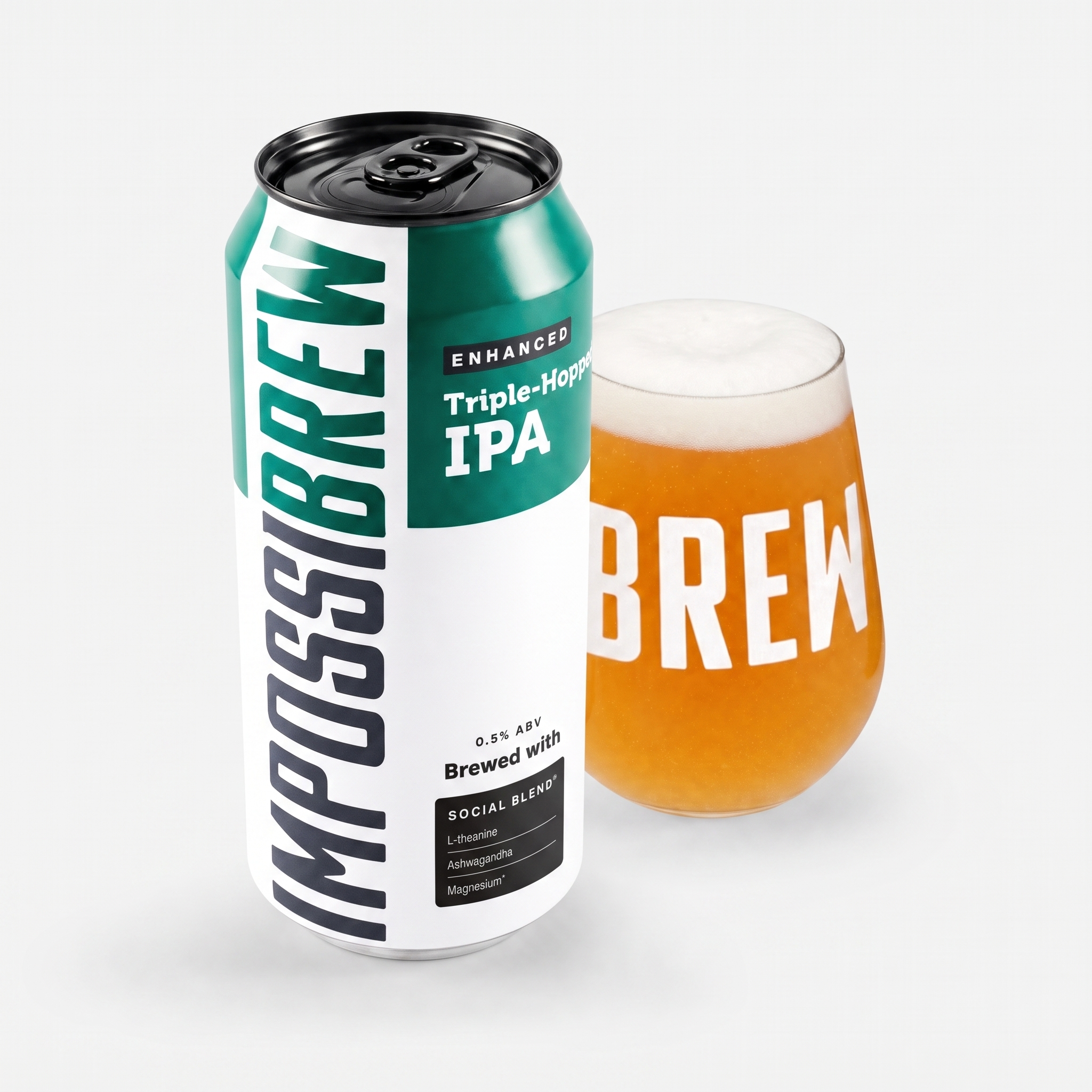
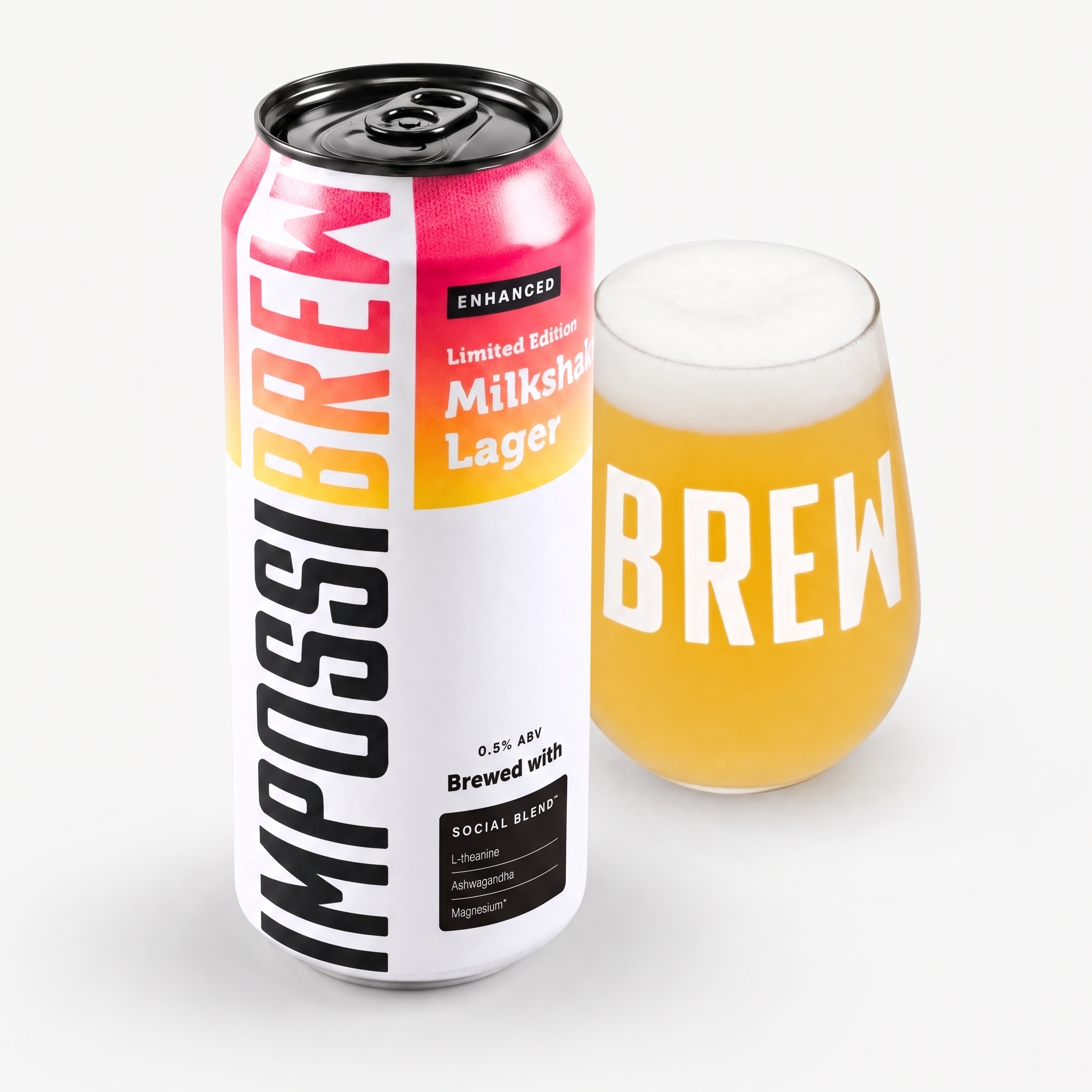
The social drinking scene in the UK is evolving, with functional beverages taking centre stage. At the heart of this shift is IMPOSSIBREW®, a UK-based company founded in 2021 by Mark Wong. After health issues forced him to give up alcohol, Wong set out to create something that would allow people to enjoy social experiences without the downsides of traditional drinking. The result? A line of enhanced non-alcoholic beers that offer more than just a drink - they offer a solution for those seeking health-conscious alternatives.
Science-Driven Beers with a Purpose
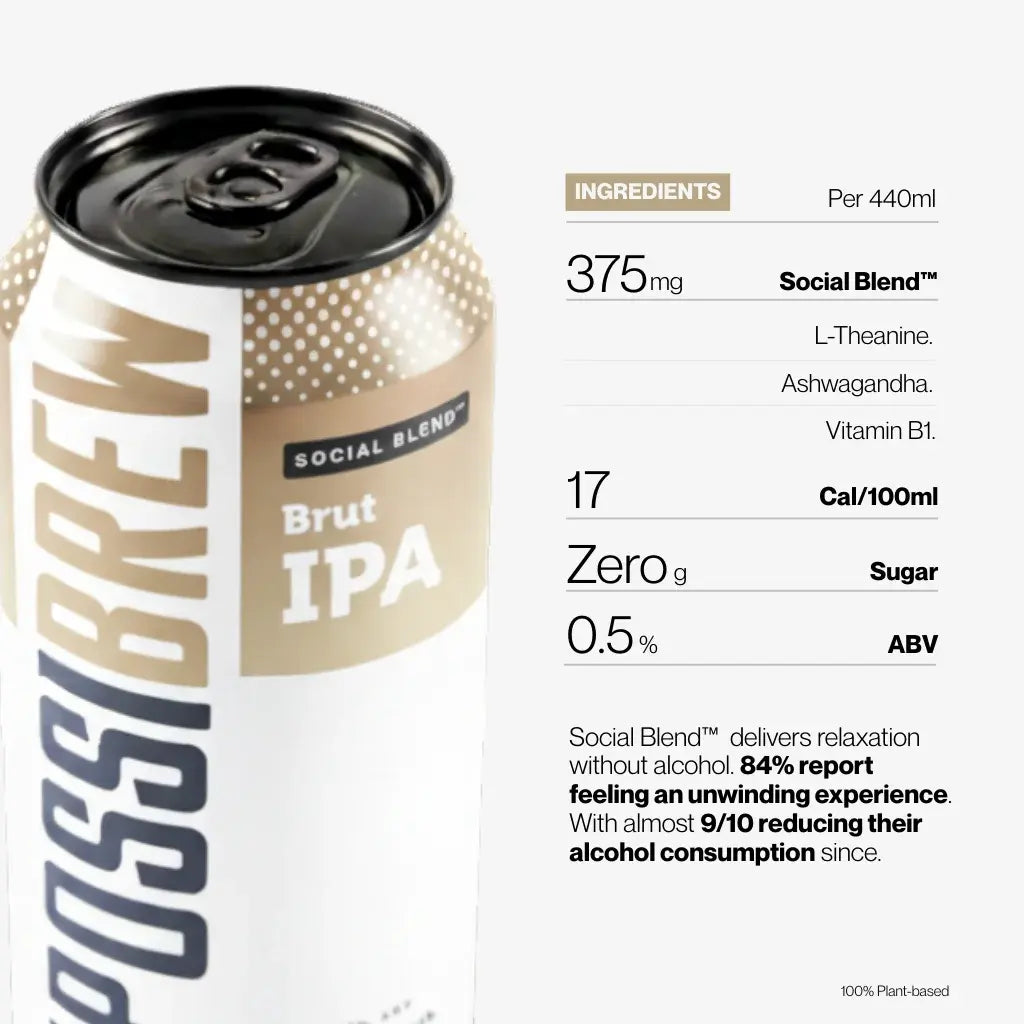
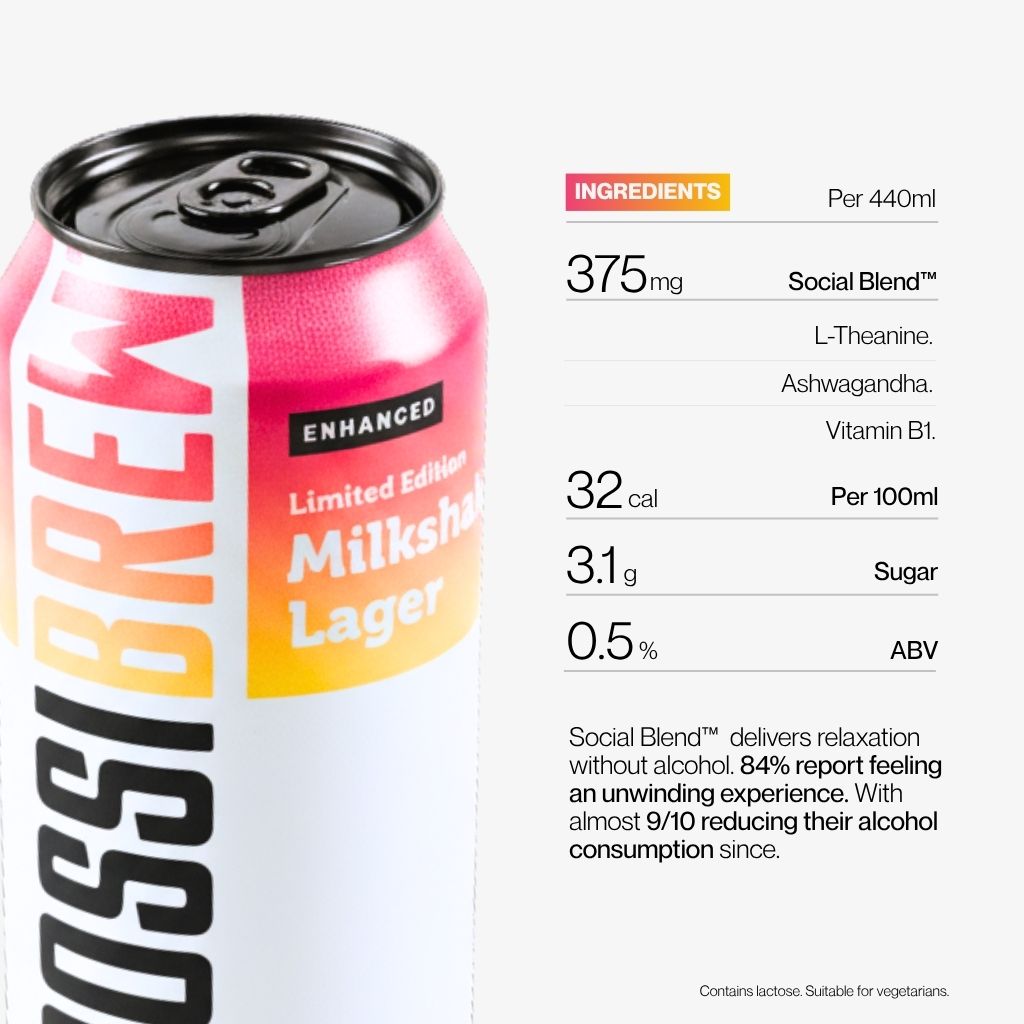
IMPOSSIBREW® has redefined the idea of non-alcoholic beer with its unique Social Blend™. This formula combines carefully selected, science-backed ingredients to mimic the relaxing effects of alcohol - without any of the negatives. Collaborating with experts, including Dr Paul Chazot from Durham University [6], the company developed a nootropic blend featuring ingredients like L-Theanine, Ashwagandha, soluble plant fibres, Vitamin B1, and plant extracts.
The results speak for themselves: over 70% of participants in studies reported feeling relaxed after drinking IMPOSSIBREW®, 88% reduced their alcohol intake, and 95% recommended it to friends. Many have even called it "the most complete alcohol alternative currently available" [6]. Unlike traditional non-alcoholic beers, which simply remove the alcohol, IMPOSSIBREW® brews its products from scratch, ensuring the Social Blend™ is fully integrated for an authentic flavour experience [6].
IMPOSSIBREW® Products and What Sets Them Apart
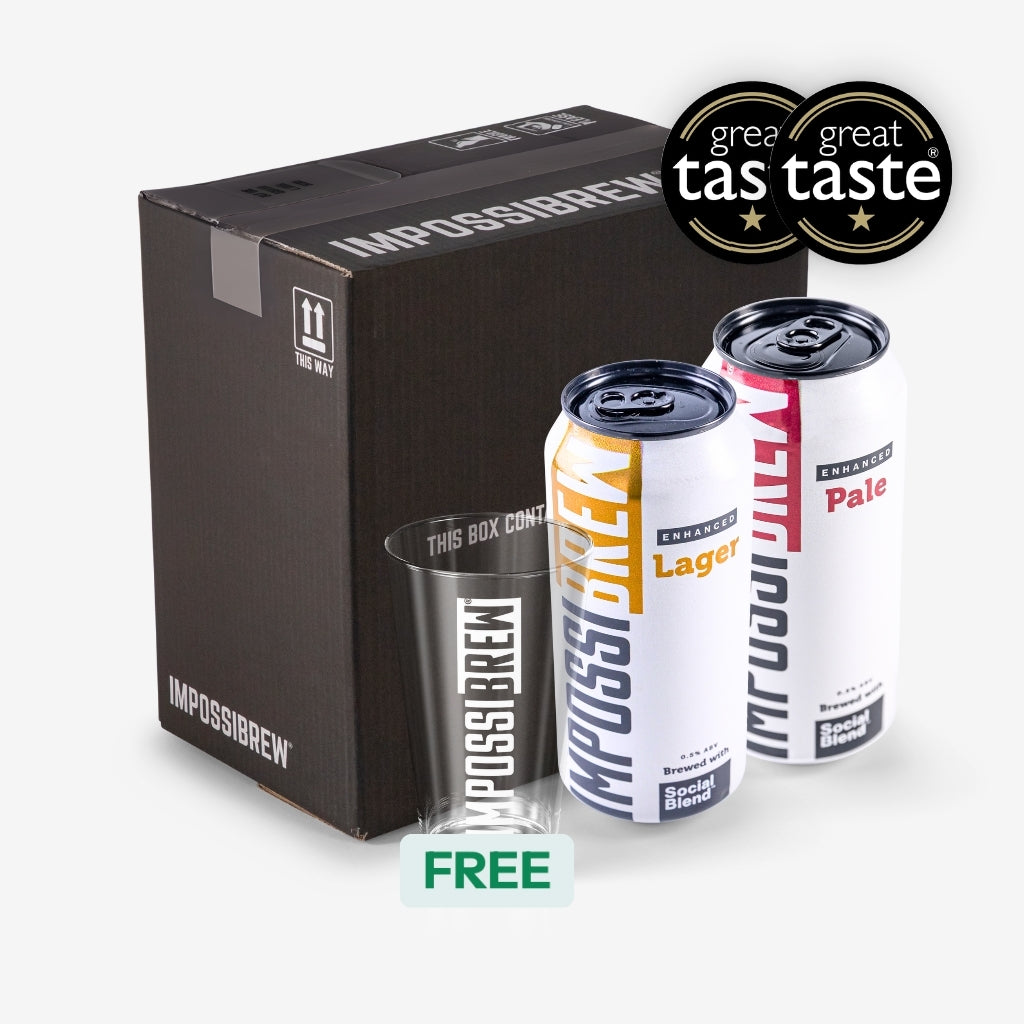
IMPOSSIBREW® offers two standout beers:
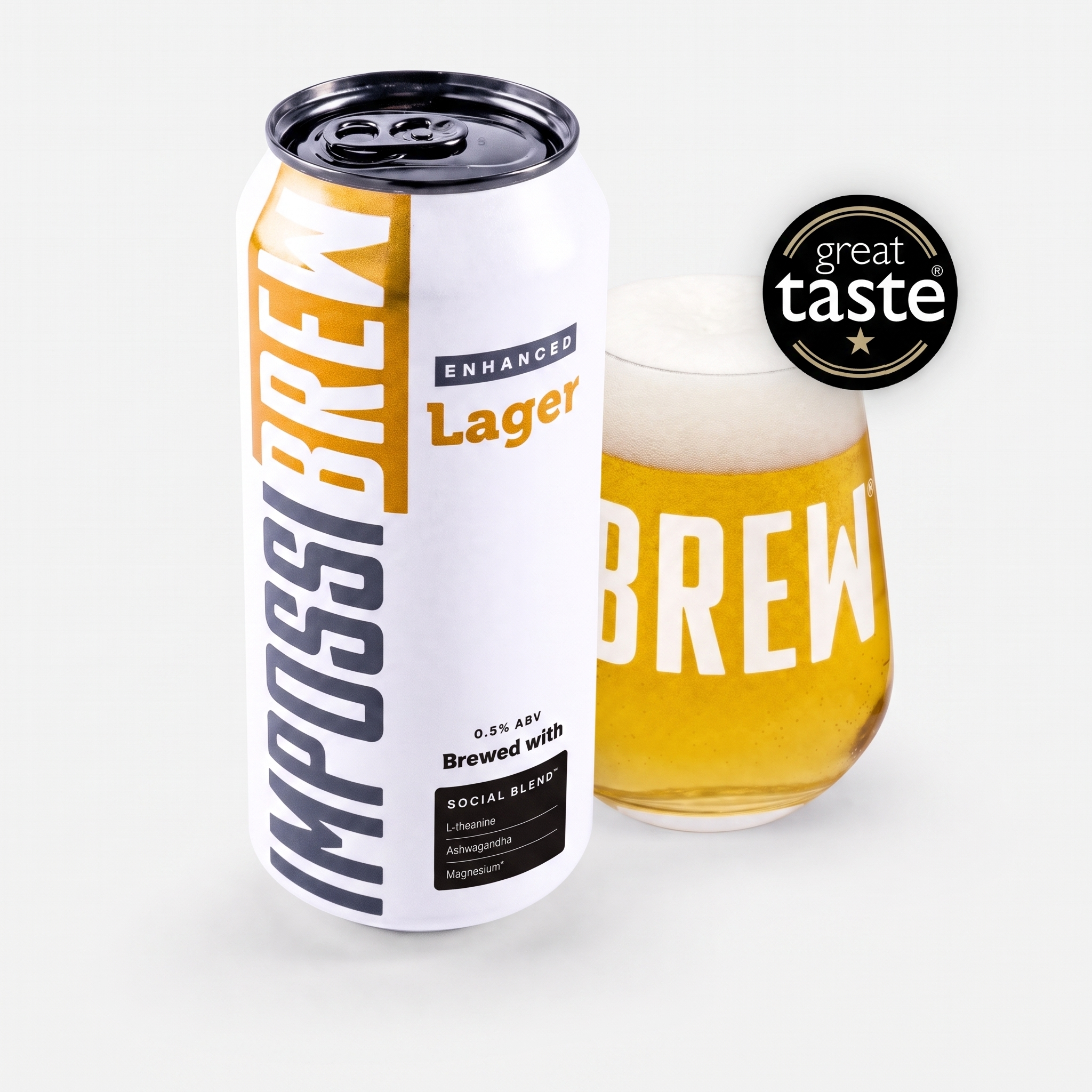
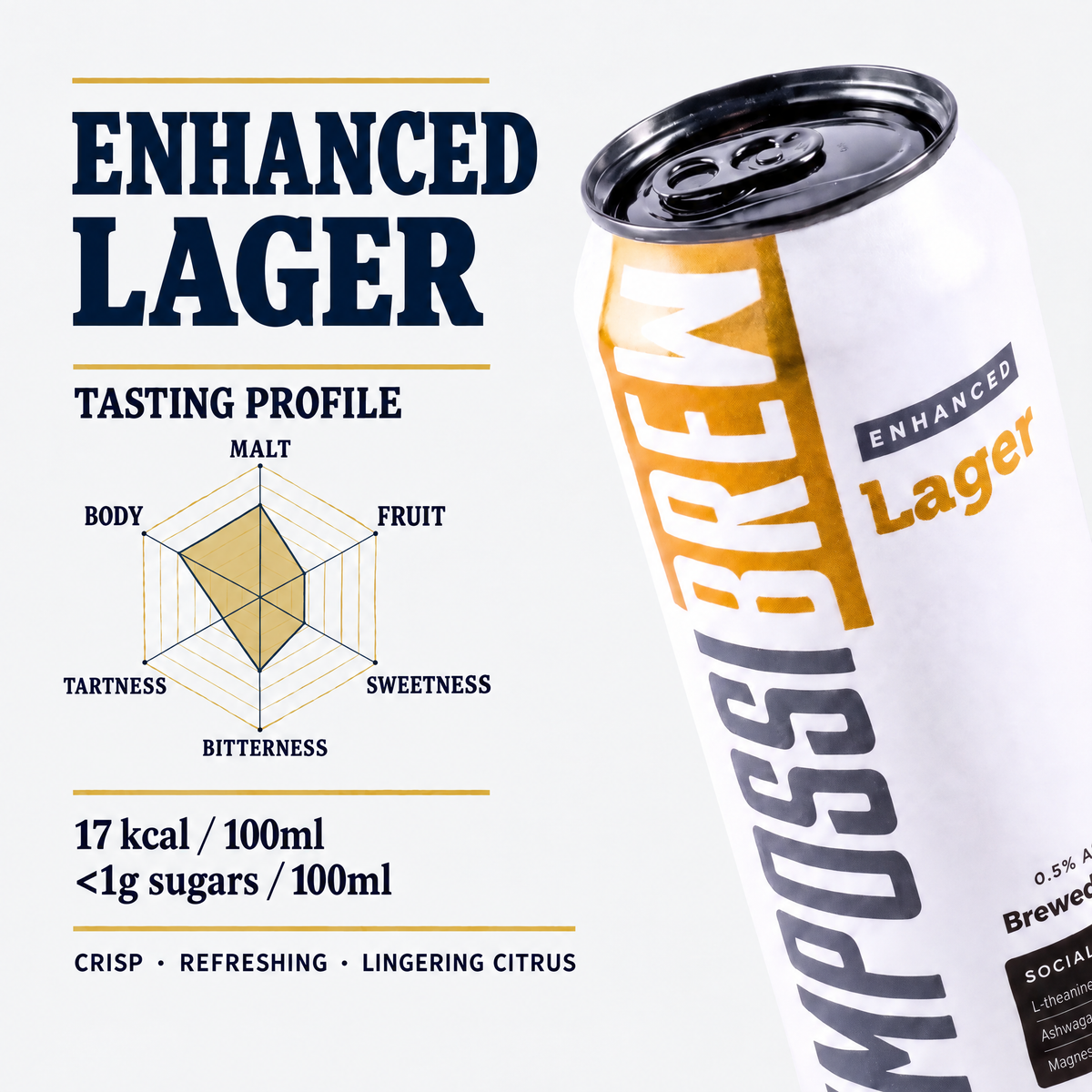
- Enhanced Lager: Crisp and dry with a refreshing citrus finish.
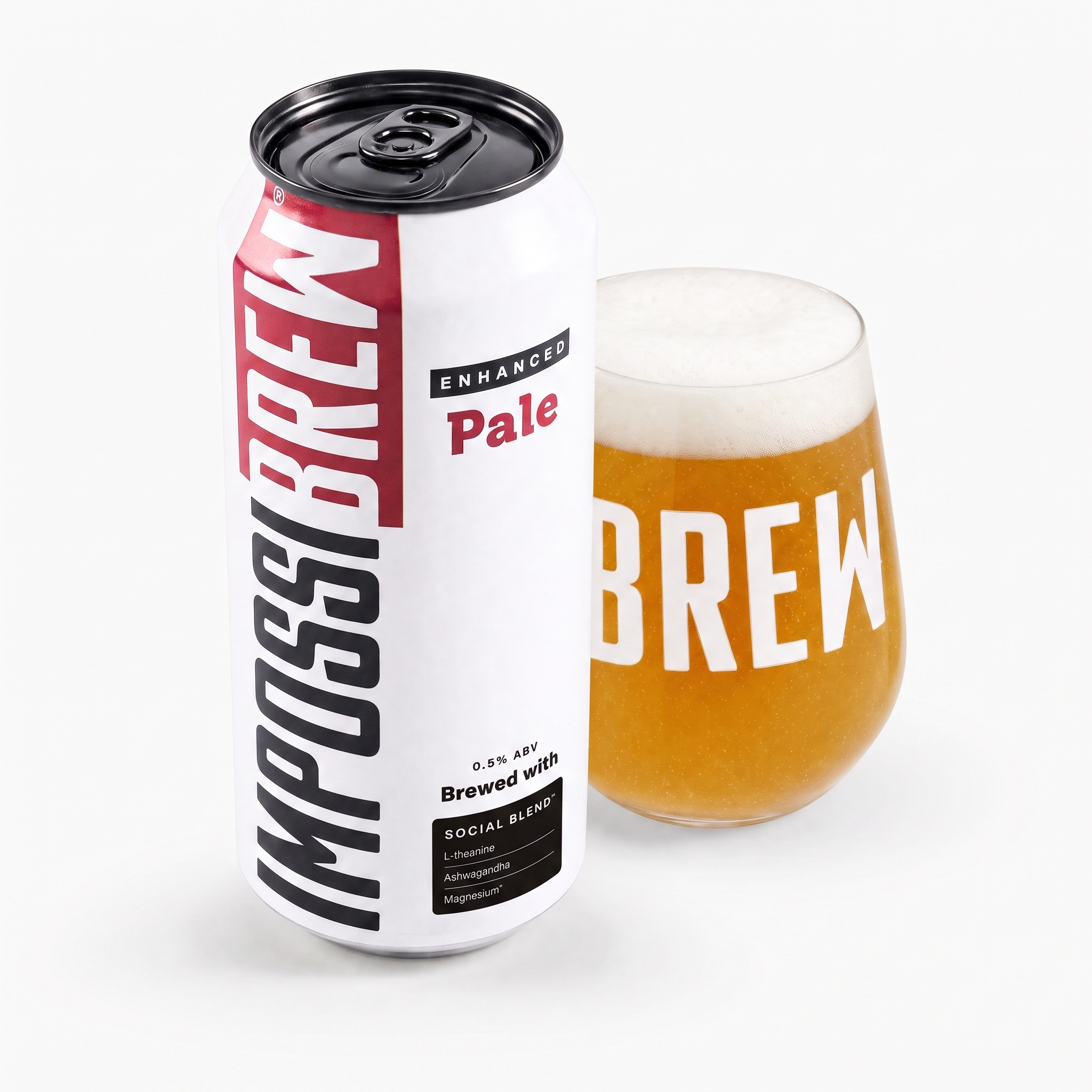
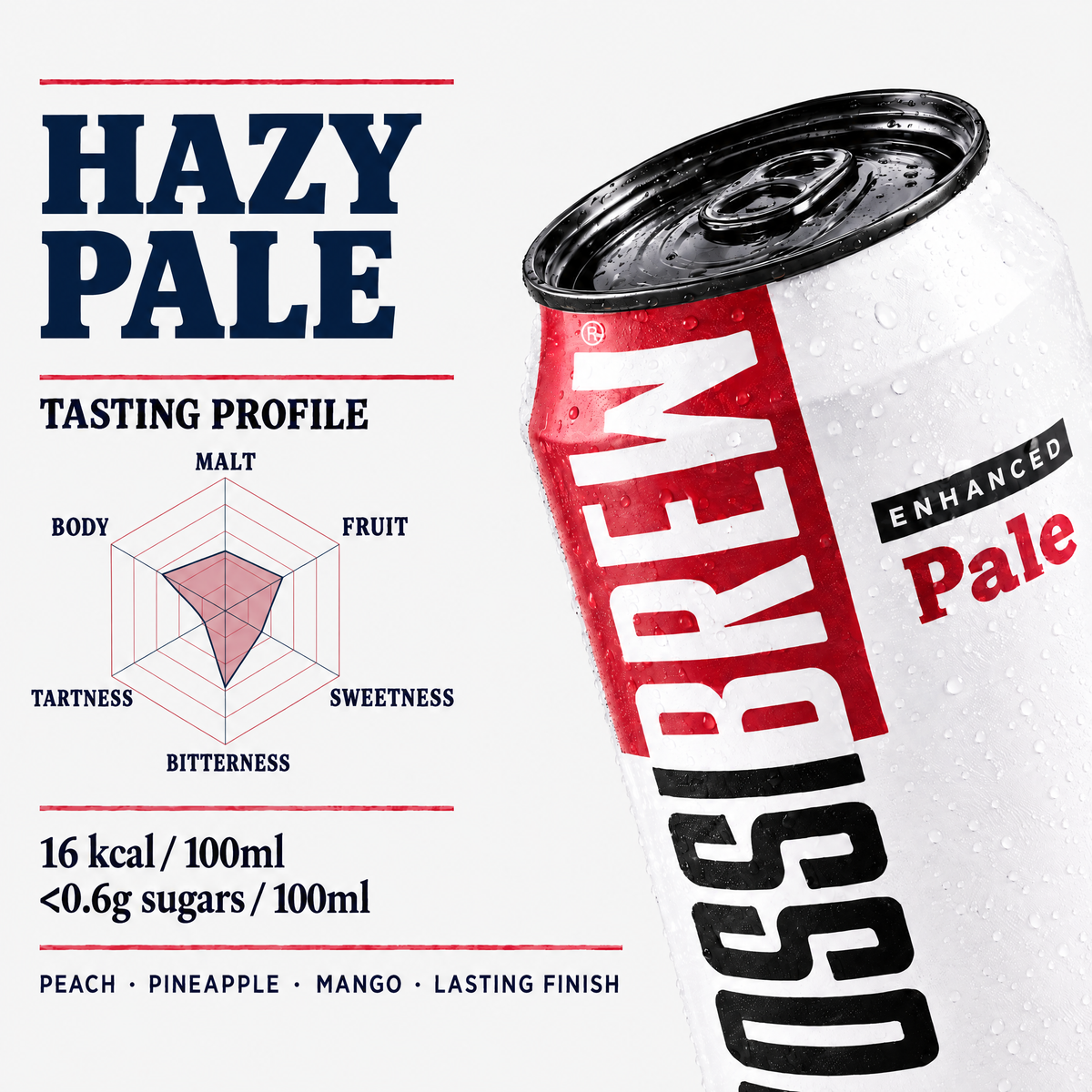
- Enhanced Hazy Pale: Packed with tropical, fruity notes and a smooth texture.
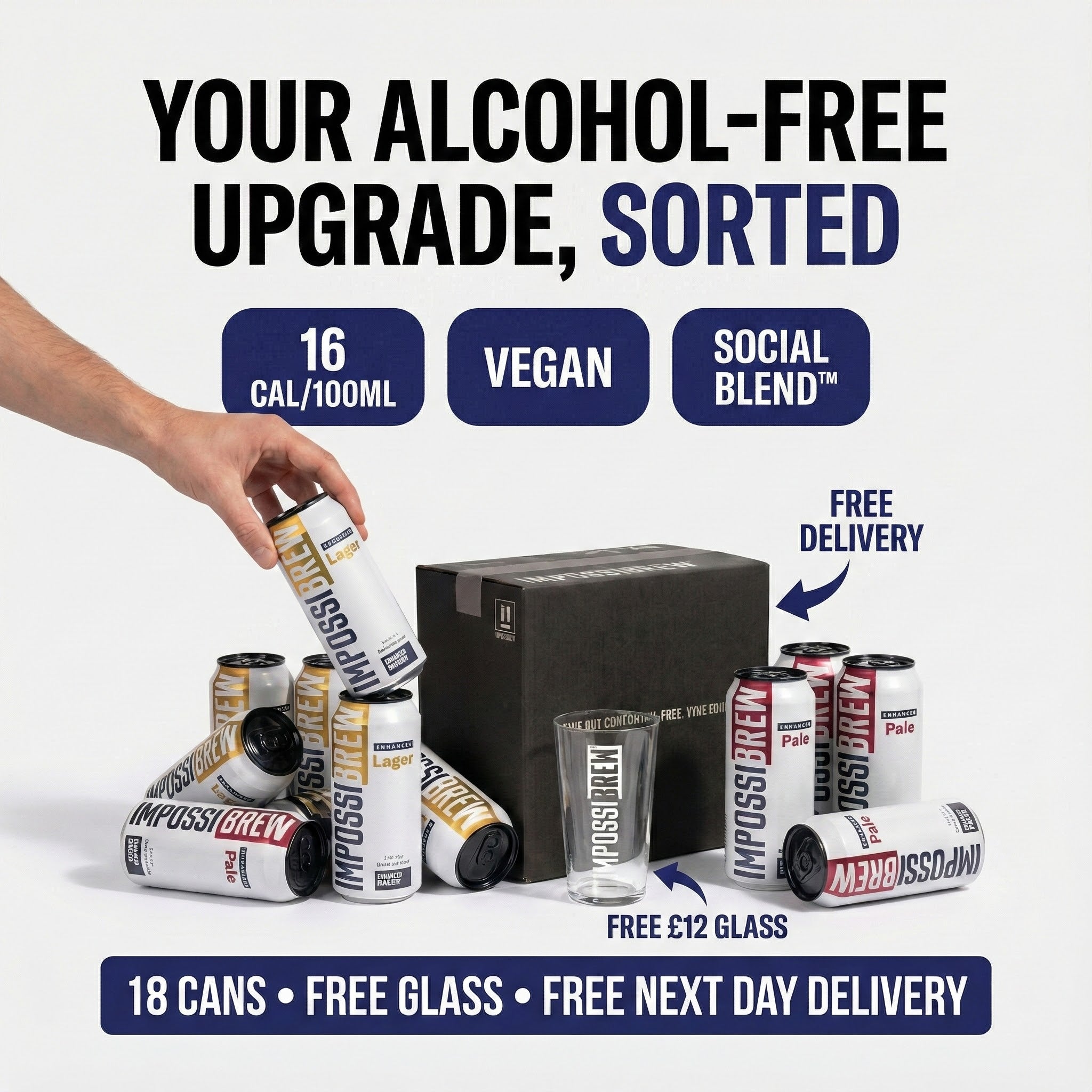
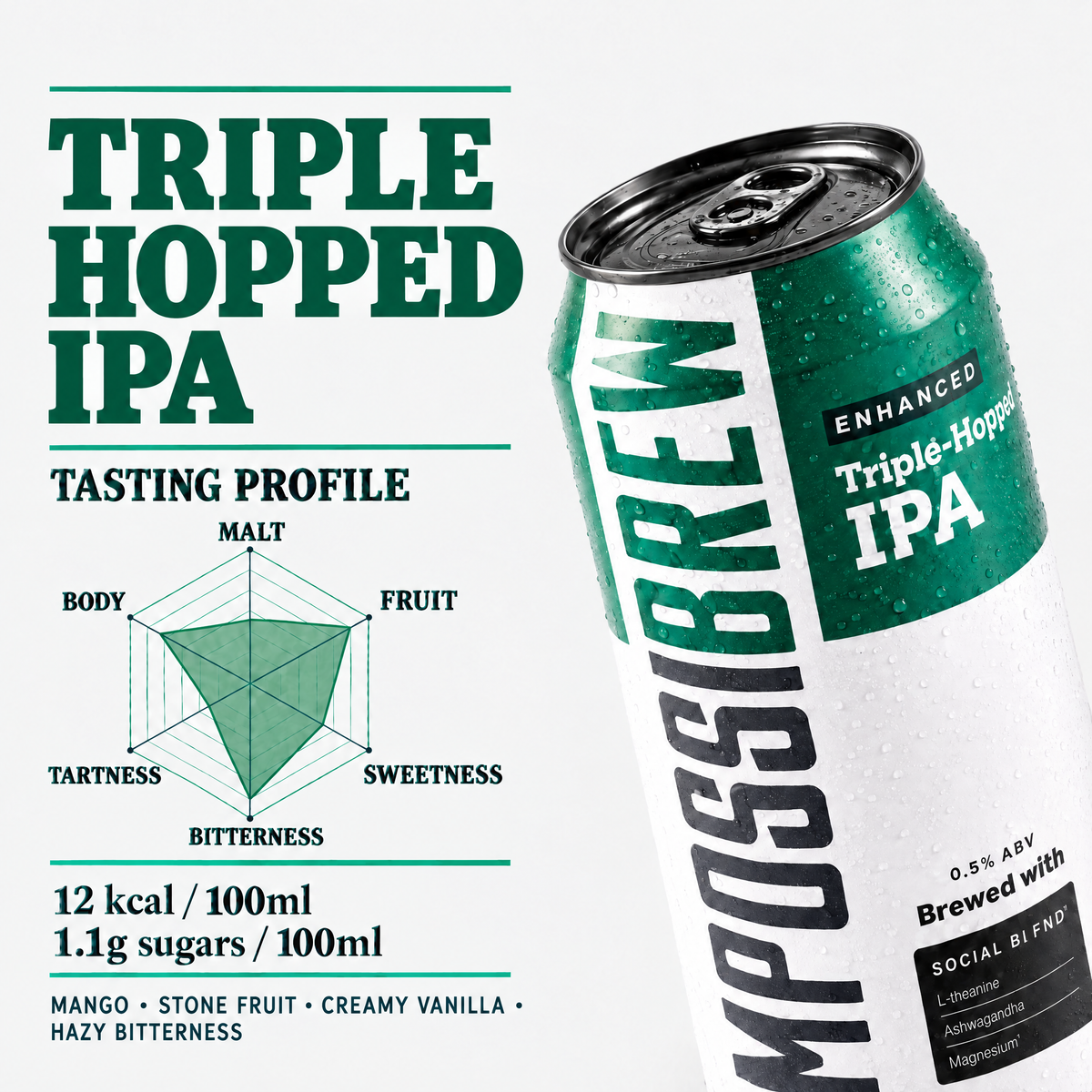
Both beers contain less than 0.5% ABV and include the full Social Blend™. They’re also low in calories - just 49–66 per 330ml can compared to the 120–150 calories in regular beer - and are vegan-friendly. The Lager is also gluten-free, catering to even more dietary preferences.
The quality of these beers hasn’t gone unnoticed. The Enhanced Lager earned a Gold Medal at the London Beer Competition, while the Enhanced Hazy Pale received the Great Taste award [6]. Starting at £2.99 per can, IMPOSSIBREW® also offers value bundles priced from £49.99, which include extras like a free glass and tasting guide. Limited seasonal editions add variety to their core range, keeping things interesting for customers.
A Beer That Brings People Together
IMPOSSIBREW® is about more than just great-tasting beer; it’s about fostering connection. The brand’s mission - "We exist because we believe in a world where social connection doesn't demand compromise" - ensures that everyone can participate in the beer-drinking ritual, regardless of their health or lifestyle choices.
Using patent-pending technology, IMPOSSIBREW® creates beers that deliver the full sensory experience of traditional alcoholic beverages. This approach, combined with their Social Blend™, allows drinkers to enjoy the taste and feel of beer without having to compromise their wellness goals.
Whether enjoyed in pubs, restaurants, or at home, IMPOSSIBREW® fits seamlessly into any social setting. For venues, it’s an opportunity to cater to a growing audience of health-conscious and sober-curious consumers. The no- and low-alcohol beer market in the UK grew by 23% in 2022, with 39% of adults having tried a no- or low-alcohol drink. Among 18–24-year-olds, 18% now identify as teetotal, a significant rise from 10% a decade ago [6]. Impressively, over 70% of IMPOSSIBREW® customers use the products as a direct replacement for alcoholic beer in social settings [6].
Alcoholic Drinks vs Functional Beverages: A Direct Comparison
The move towards functional beverages is intentional and reflects a broader shift in priorities. When you compare traditional alcoholic drinks to functional options like IMPOSSIBREW®, the distinctions stand out in terms of health, social experiences, and lifestyle alignment. These differences influence both short-term effects and long-term wellbeing.
Health, Social, and Lifestyle Differences
Alcoholic drinks and functional beverages differ significantly in how they impact health, social interactions, and day-to-day life.
| Aspect | Alcoholic Drinks | Functional Beverages |
|---|---|---|
| Health Impact | Can cause dehydration, liver strain, poor sleep, and are often calorie-heavy | Promote hydration, ease stress, and typically have fewer calories |
| Next-Day Effects | Often result in hangovers, fatigue, and decreased mental clarity | Leave no negative after-effects, offering sustained energy and mental sharpness |
| Social Experience | Provide temporary confidence but risk overindulgence | Encourage relaxation while keeping social awareness intact |
| Lifestyle Fit | Can interfere with fitness goals, work performance, and family responsibilities | Complement wellness goals, boost productivity, and suit active, health-focused lifestyles |
| Inclusivity | May exclude individuals avoiding alcohol for health, religious, or personal reasons | Allow everyone to participate in social drinking rituals without alcohol-related barriers |
This comparison highlights why functional beverages are becoming a natural fit for modern, wellness-oriented lifestyles.
The health benefits are especially noteworthy when you consider the science behind functional beverages. Options like IMPOSSIBREW® often include ingredients such as adaptogens and nootropics. For instance, L-Theanine - a key adaptogen in IMPOSSIBREW® - promotes relaxation without the negative effects associated with alcohol. While alcohol acts as a depressant and can lead to lingering after-effects, functional ingredients like L-Theanine work harmoniously with your body to encourage calm focus.
The demand for functional beverages is also growing rapidly. Globally, the market is projected to reach £196.2 billion by 2026 [5].
Elliott Edge, a bartender and manager at Hekate, captures the changing mindset:
"People are curious. It seems like they are tired of relying exclusively on something like alcohol for the moods and feelings they want" [5].
Alcohol consumption often comes with strings attached - like recovery time, disrupted sleep, and challenges to maintaining an active lifestyle. Functional beverages, on the other hand, integrate effortlessly into daily routines. They support wellness goals, enhance productivity, and provide social ease without compromising judgment. This makes them a practical choice for those looking to balance health and social connection.
Inclusivity is another major advantage. Functional beverages allow individuals who avoid alcohol - whether for health, religious, or personal reasons - to partake in the shared experience of having a drink. By eliminating alcohol's common inconveniences, such as the need for taxis or the risk of lost productivity, they resonate strongly with today’s health-conscious and goal-driven consumers.
Conclusion: Why Functional Beverages Are the Future of Social Drinking
The way people in the UK approach drinking is changing, and functional beverages are at the forefront of this shift. With a 54% year-on-year growth in the functional drinks market and the no- and low-alcohol sector expected to hit £380 million by the end of 2024, this is more than just a fleeting trend - it’s a reimagining of how we socialise [7][9].
Younger generations are embracing functional beverages at a remarkable rate, signalling a long-term transformation in social drinking habits. This change is poised to reshape British pub culture, workplace gatherings, and other social settings for years to come. Functional beverages are not just an alternative - they are redefining what it means to connect socially.
Rethinking Social Drinking with Functional Beverages
Traditional alcohol-based socialising often comes with drawbacks, from health concerns to decreased productivity. Functional beverages address these issues by offering the same sense of relaxation and social ease, but with added benefits for wellbeing.
These drinks break down social barriers, making spaces more inclusive for everyone - whether due to health reasons, religious practices, pregnancy, or personal preference. By aligning with modern wellness values, functional beverages ensure that social rituals remain accessible and enjoyable for all.
Take brands like IMPOSSIBREW®, for example. They’ve introduced science-backed solutions that keep the social experience authentic. With ingredients like adaptogens and nootropics, their products promote relaxation and connection without the need for alcohol. Their proprietary Social Blend™ technology ensures that choosing a functional drink doesn’t mean sacrificing the sensory pleasure or the cherished rituals of social drinking.
As the focus on health and wellness grows, businesses are taking note. Colin Grieves from Experian UK&I highlights this shift, saying:
"The sustained growth in health and wellness spending reflects evolving consumer priorities and it's crucial that retailers understand what trends are emerging in the market." [8]
The UK’s social drinking landscape is evolving, and functional beverages are leading the way.
FAQs
What are the health benefits of ingredients like L-Theanine and Ashwagandha in functional beverages?
L-Theanine is widely recognised for its calming effects, helping to ease stress and encourage relaxation without making you feel sleepy. It can also sharpen focus during the day and, when taken in the evening, may improve the quality of your sleep.
Ashwagandha, a natural herb with adaptogenic properties, is known for its ability to help the body cope with stress by reducing cortisol levels. Beyond stress relief, it can uplift your mood, boost energy, and support overall mental well-being.
When combined, these two ingredients create functional beverages that offer a soothing and restorative experience - perfect for those embracing a mindful, health-focused lifestyle.
How do functional beverages like IMPOSSIBREW® recreate the relaxing effects of alcohol without the downsides?
Functional drinks like IMPOSSIBREW® are crafted with a mix of natural, scientifically studied ingredients designed to mimic the relaxing effects of alcohol - minus the downsides. These drinks often include components like adaptogens, nootropics, hops, ashwagandha, and L-theanine, which work together to promote relaxation, ease stress, and lift your mood.
By interacting with the brain's GABA system, these ingredients help create a sense of calm and sociability. They provide a modern, healthier alternative to traditional alcoholic beverages, allowing you to enjoy the moment without worrying about hangovers or mental fog.
How are functional beverages reshaping socialising in pubs and restaurants?
Functional beverages are reshaping the way we socialise, providing options that suit a broader variety of tastes and lifestyles. These drinks offer an inclusive alternative for those who choose to avoid alcohol or are simply looking for healthier choices, allowing them to enjoy social outings at pubs and restaurants without feeling left out.
By mimicking some of the sensory and communal experiences linked to alcohol, these beverages help foster a more inclusive and welcoming environment. This change not only questions the dominance of alcohol in social settings but also encourages a more balanced and modern approach to how we connect with others.