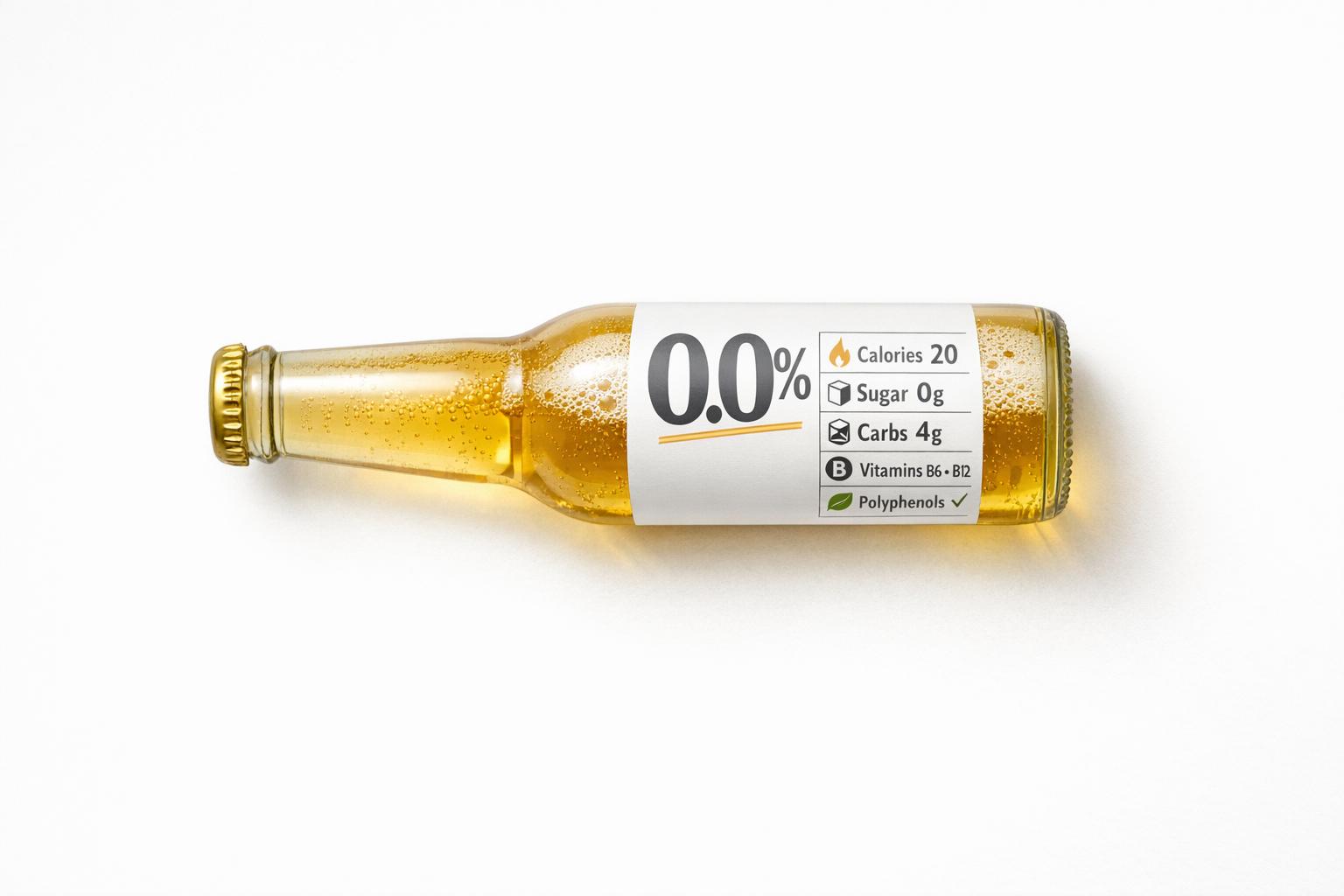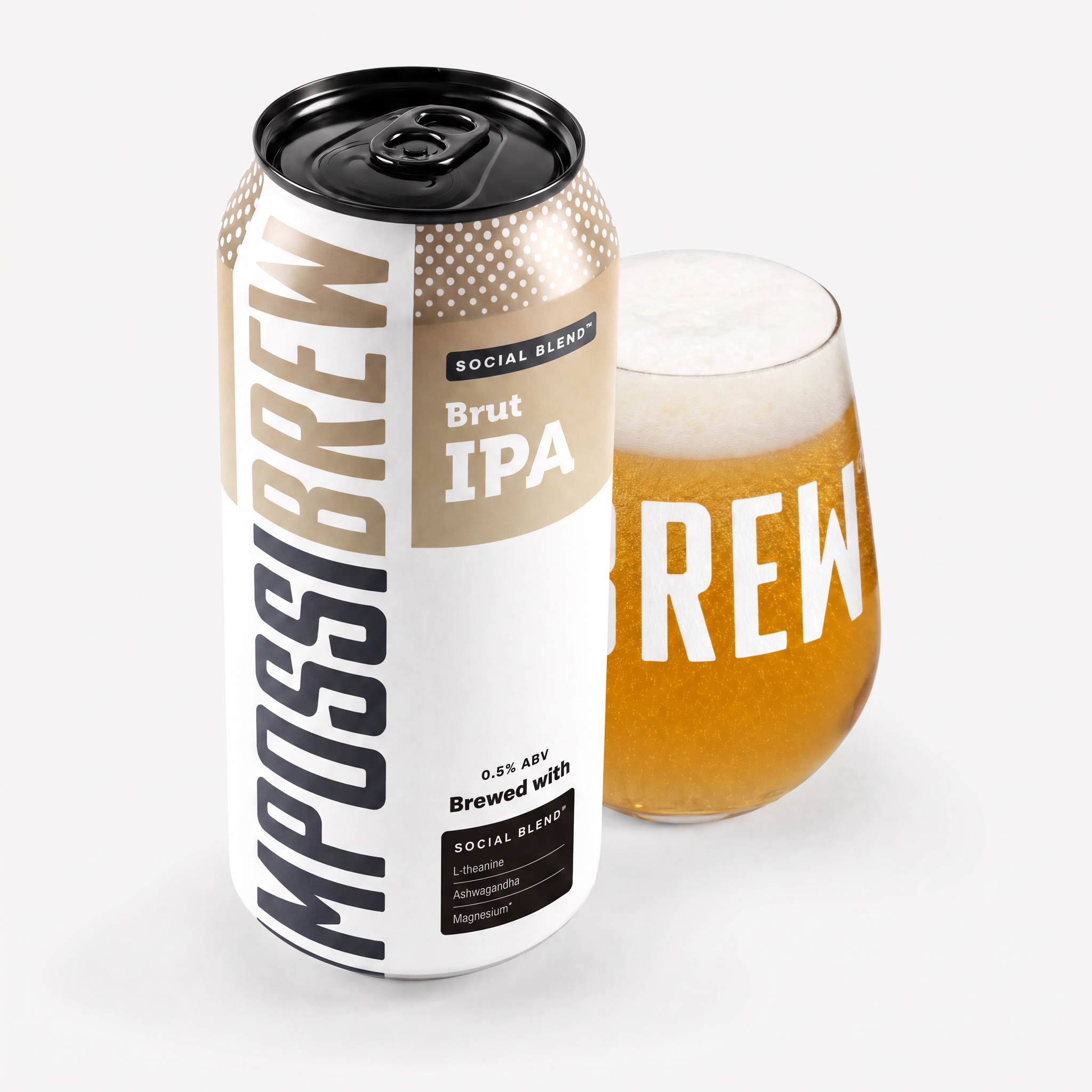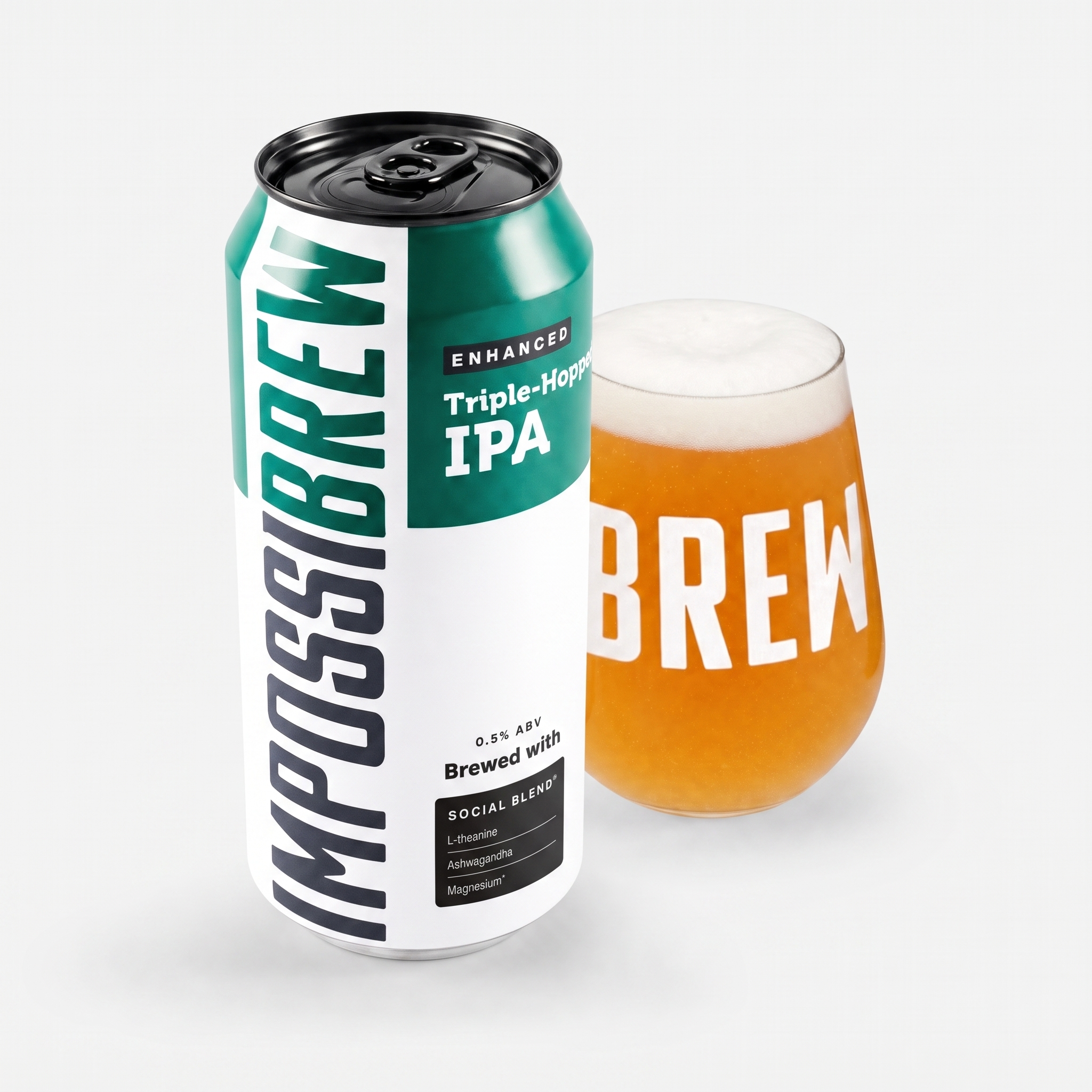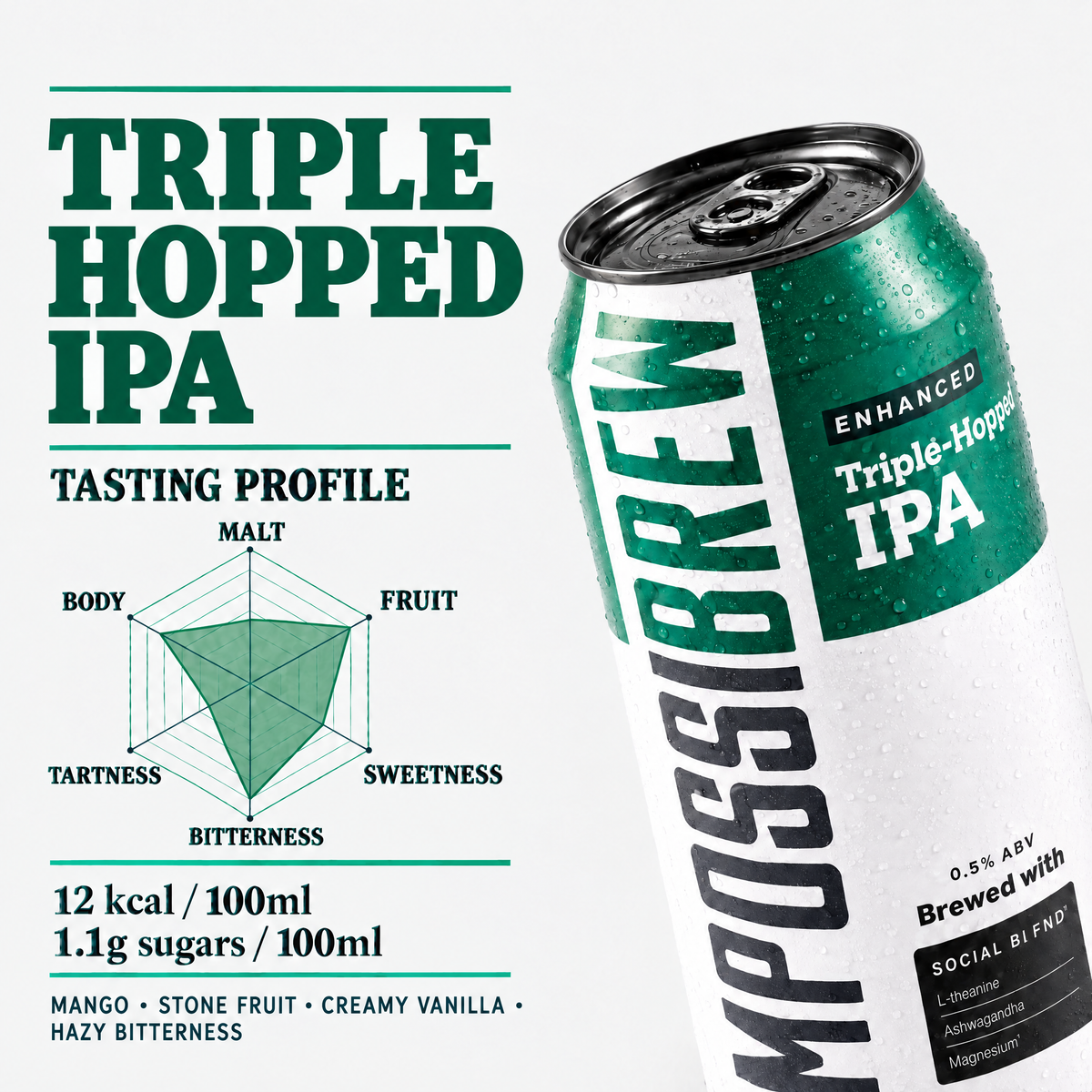
Alcohol-free beer does contain calories, but fewer calories than regular beer. The absence of alcohol, which has about 7 calories per gram, significantly reduces the calorie count. Most calories in alcohol-free beer come from residual carbohydrates and proteins left after brewing. Here’s what you need to know:
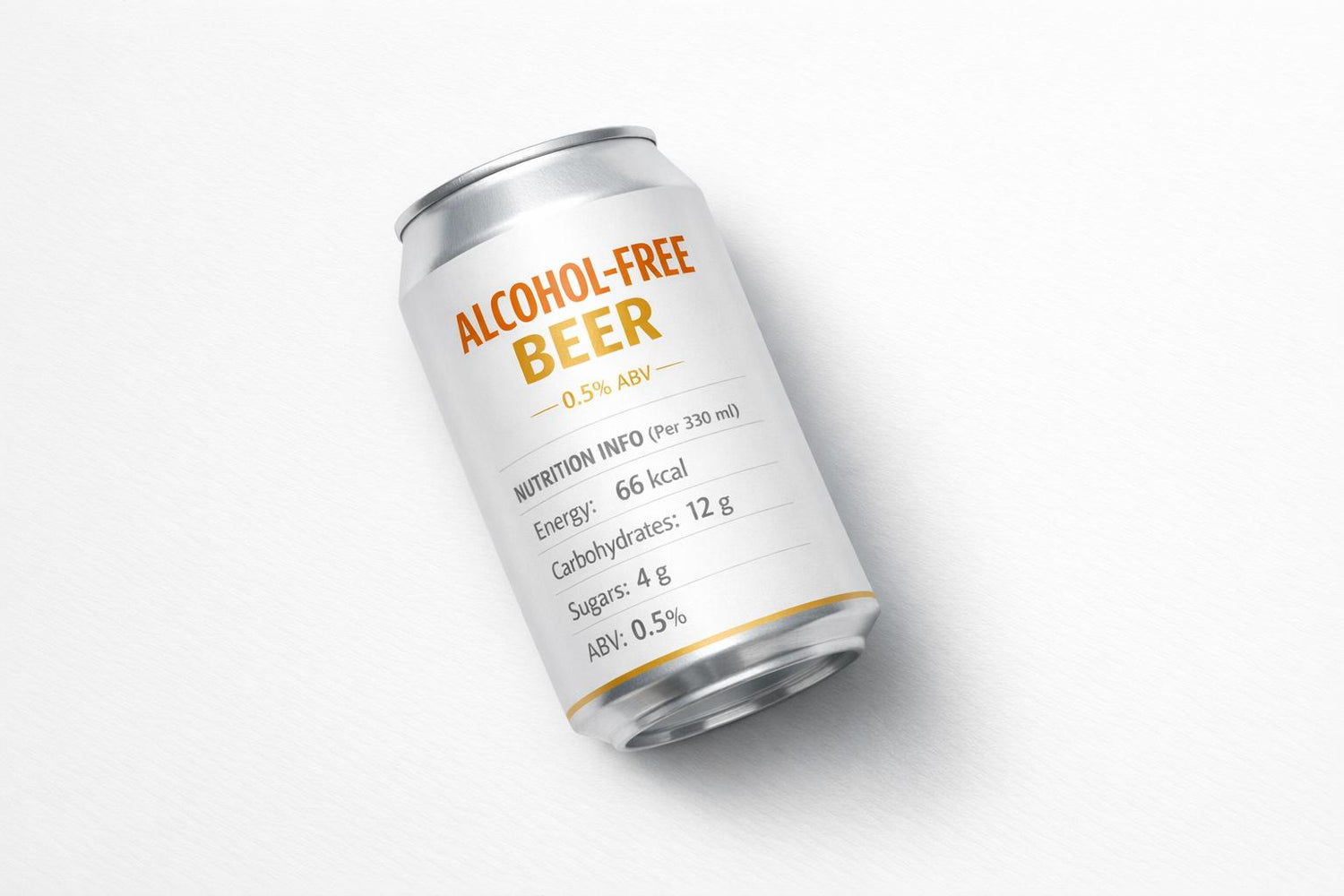
- Calorie Range: A typical 330ml bottle of alcohol-free beer contains 50–80 calories, compared to 130–180 calories in regular beer.
- Sugar Content: Some alcohol-free beers can have higher sugar levels due to brewing methods like arrested fermentation, which leaves residual sugars.
- Carbohydrates: Alcohol-free beers typically have 10–18g of carbs per 330ml serving.
- Health Considerations: While they’re lower in calories, some brands may contain enough sugar to approach the NHS's daily sugar limit of 30g for adults.
For example:
- Beck's Blue: ~46 calories per 330ml, 0.2g sugar per 100ml.
- Heineken 0.0: ~69 calories per 330ml, 1.3g sugar per 100ml.
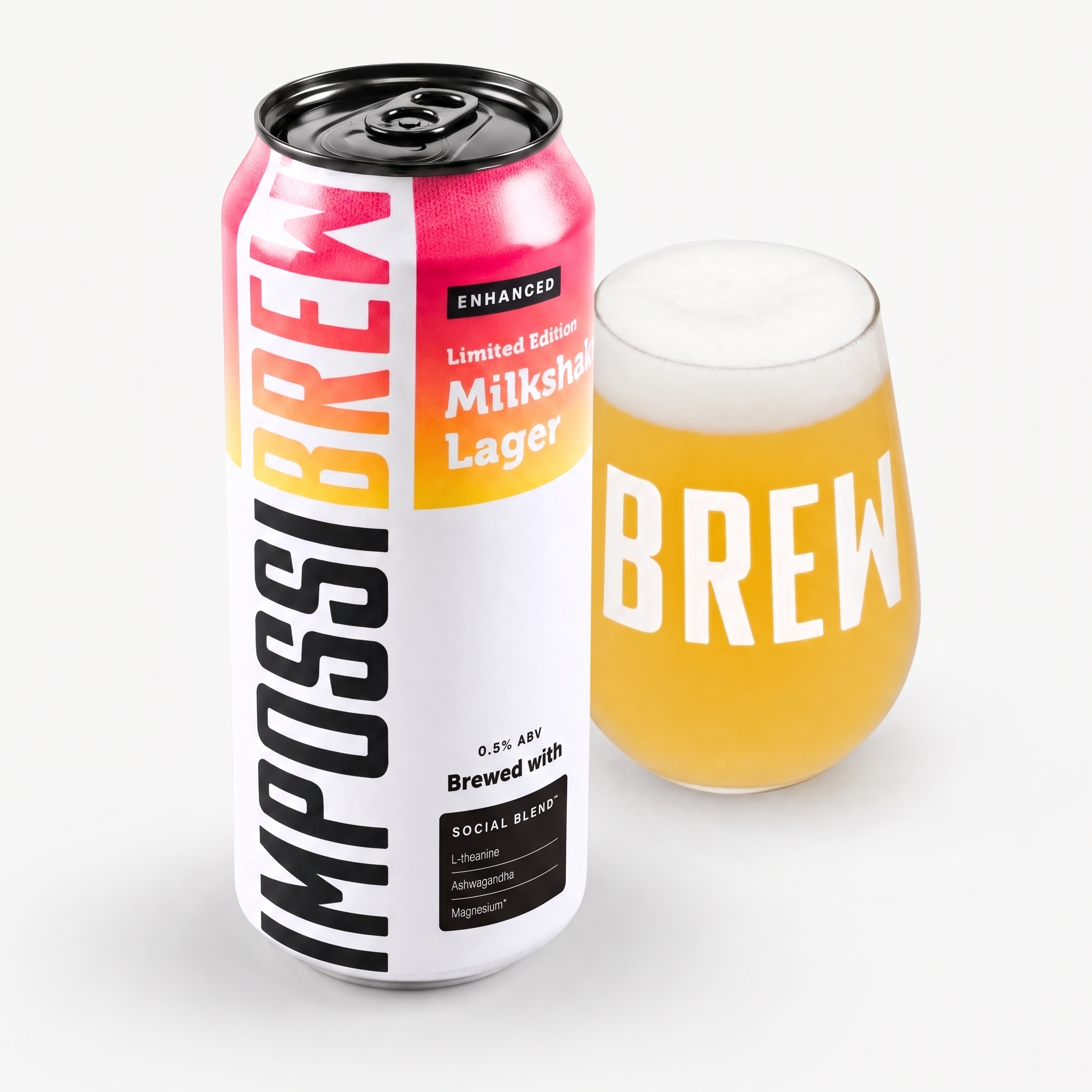
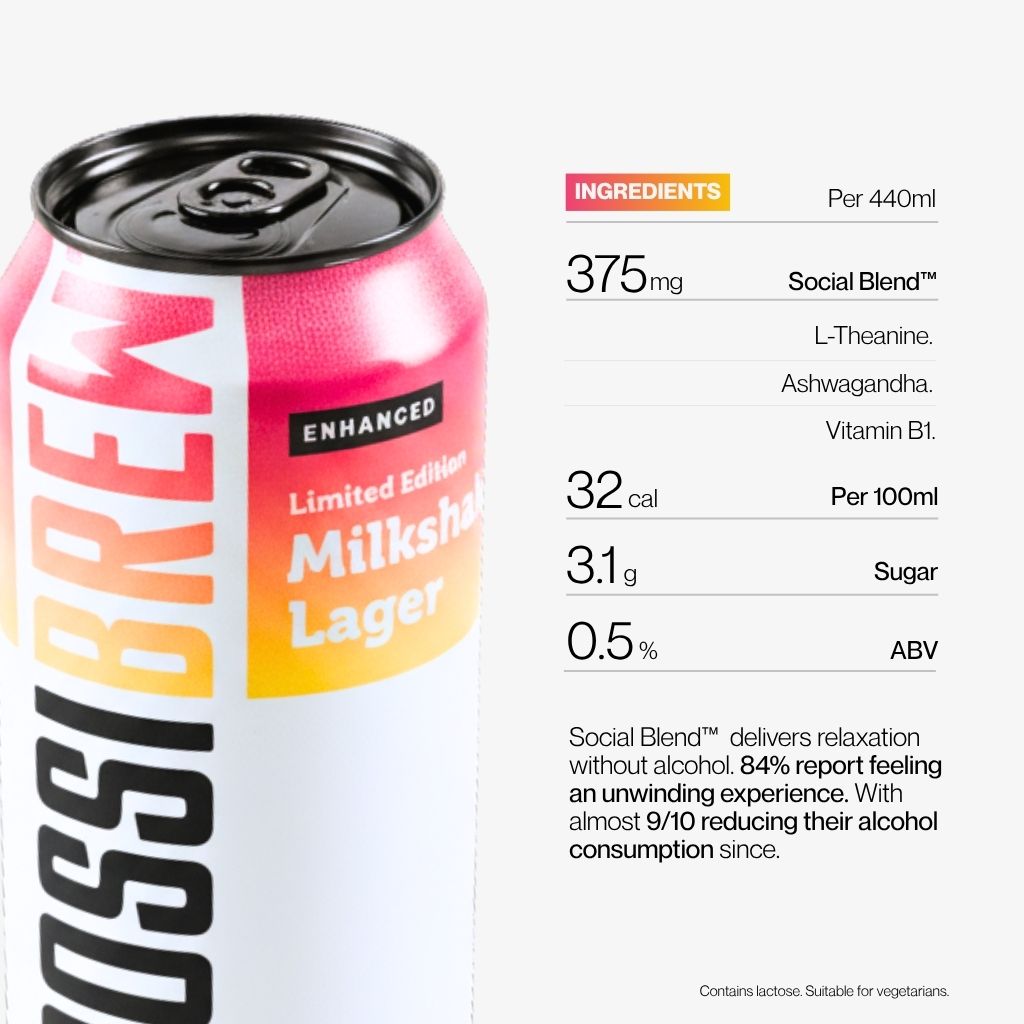
- IMPOSSIBREW® Enhanced Lager: ~75 calories per 440ml, 0.7g sugar per 100ml.
If you’re managing your calorie intake, alcohol-free beer can be a lighter option. However, always check the labels for sugar and carb content.
Is Non-Alcoholic Beer Healthy? (Full Calorie Breakdown)
Beyond just the calorie count, many people use these brews to help achieve fitness goals without sacrificing their social life.
sbb-itb-a752bf8
Where Calories Come From in Alcohol-Free Beer
Alcohol-free beer has a distinct calorie profile compared to regular beer. In traditional beer, alcohol contributes about 7 calories per gram - almost as much as pure fat. When alcohol is removed, the remaining calories come primarily from carbohydrates, which provide around 4 calories per gram. These carbohydrates are derived from malts like barley or wheat [1][4].
The brewing process plays a significant role in determining the residual sugar - and therefore the calorie content - of alcohol-free beer. One method, arrested fermentation (also known as controlled fermentation), halts the brewing process early or uses specialised yeasts that don’t fully convert sugars into alcohol. This leaves more residual sugars in the beer, increasing its carbohydrate and calorie content [1][6]. Industry experts note that beers brewed with yeasts that consume less sugar tend to have higher residual sugar levels in the final product [6].
Another approach is de-alcoholisation, where the beer is fully fermented before the alcohol is removed using techniques like vacuum distillation or reverse osmosis. This method typically results in lower residual sugar levels compared to arrested fermentation [1][5]. Andrew Odgers from Complete Nutrition explains:
The calorie difference usually comes from how much sugar or malt is left in the brew after alcohol removal, as well as any flavouring ingredients [5].
These brewing processes lead to varying levels of carbohydrates and calories in different alcohol-free beers. Some brewers intentionally leave extra sugar to enhance the body and mouthfeel that can be lost when alcohol is removed [2]. This explains why alcohol-free beers often contain about 1.7g of sugar per 100ml [1], which is generally higher than their alcoholic counterparts. A typical 330ml serving contains between 10 and 18 grams of carbohydrates [5], translating to approximately 50 to 80 calories.
Even beers with trace amounts of alcohol (up to 0.5% ABV) contribute only minimal additional calories. For example, a pint of 0.5% ABV beer adds around 15 calories, compared to the 129 calories from alcohol alone in a pint of 4% ABV beer [1].
1. IMPOSSIBREW® Enhanced Lager
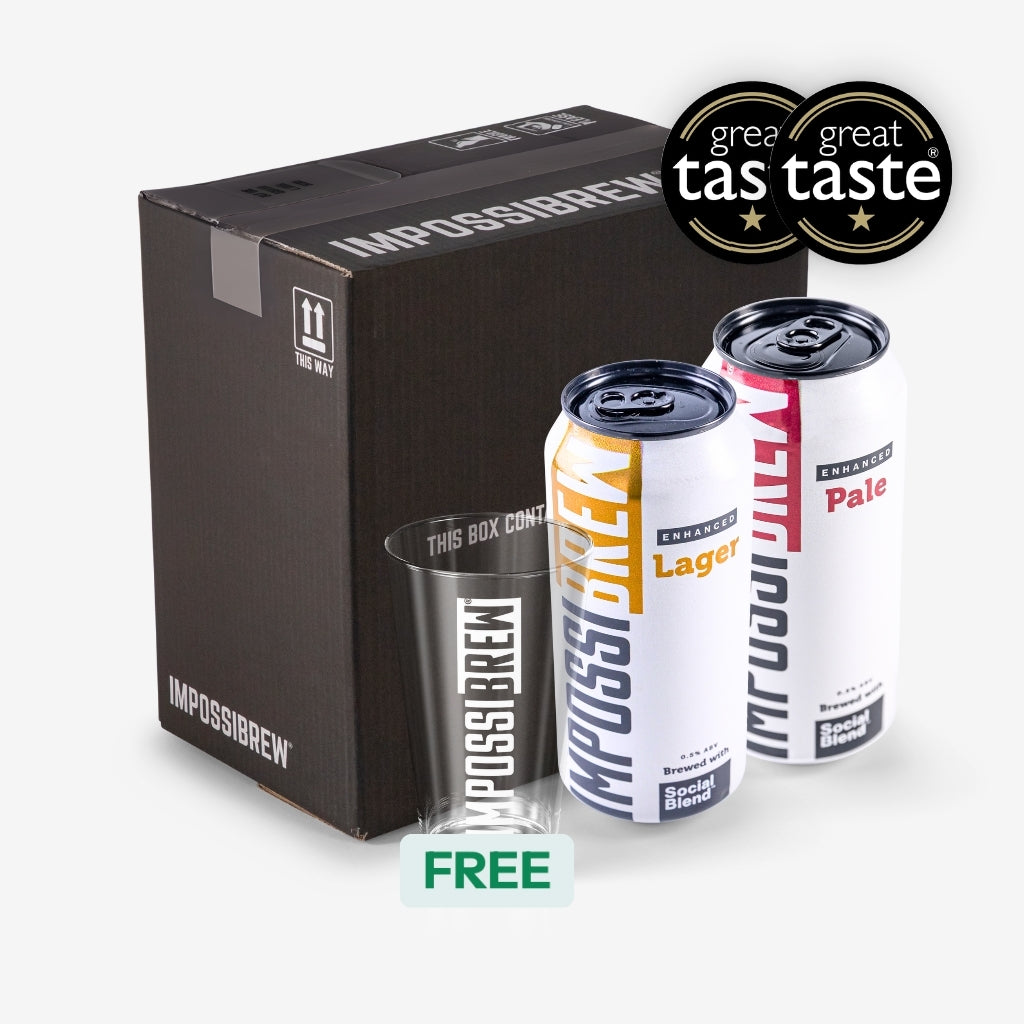
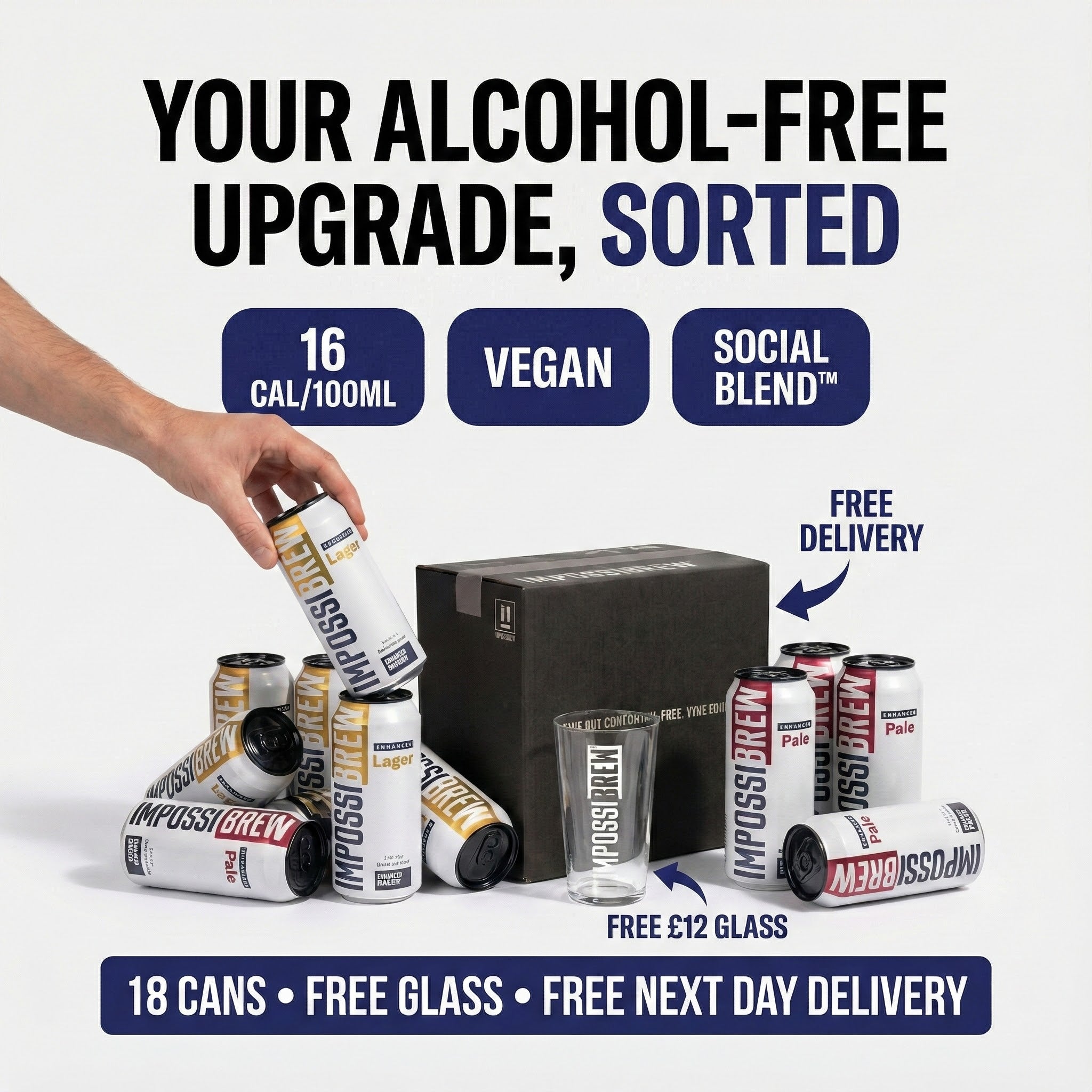
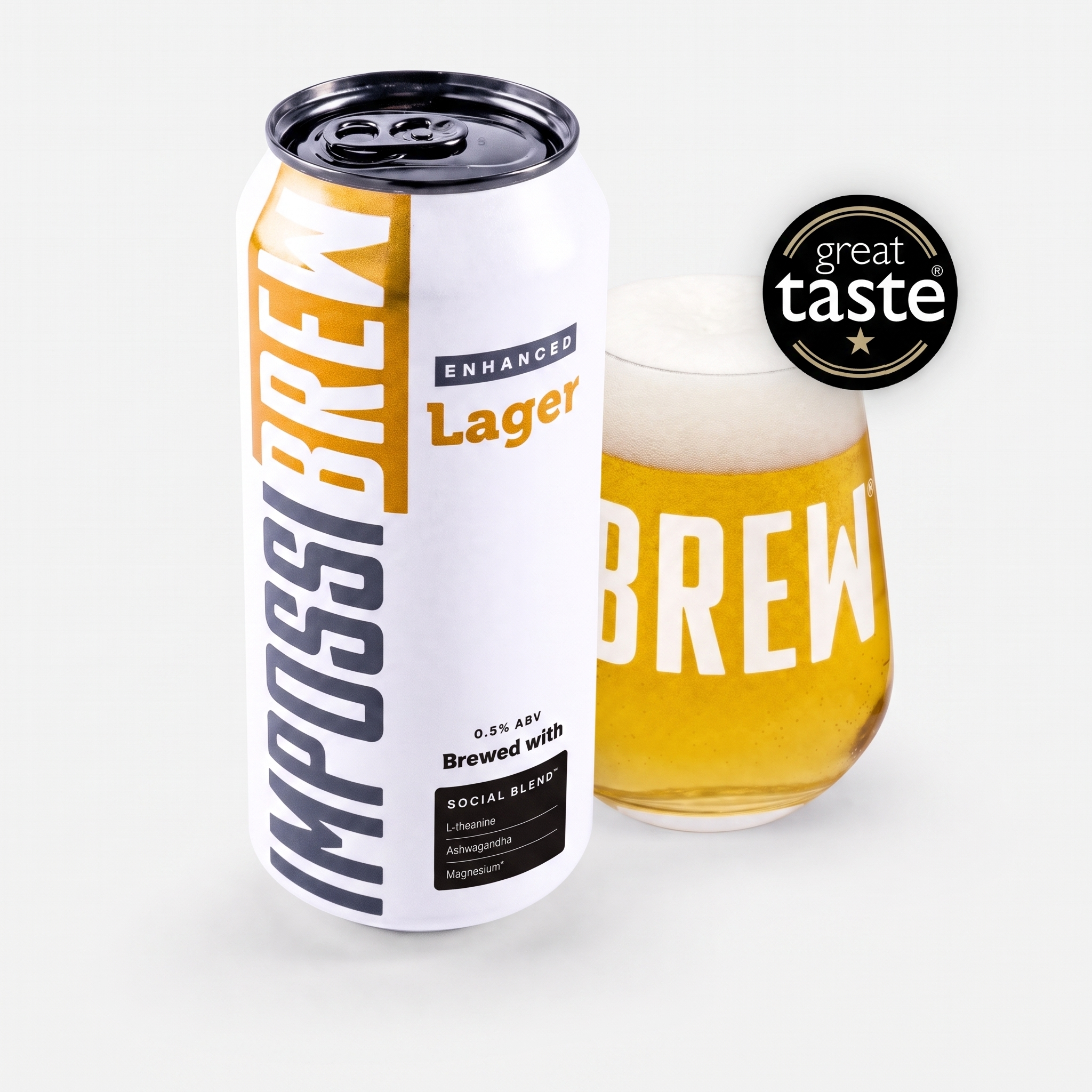
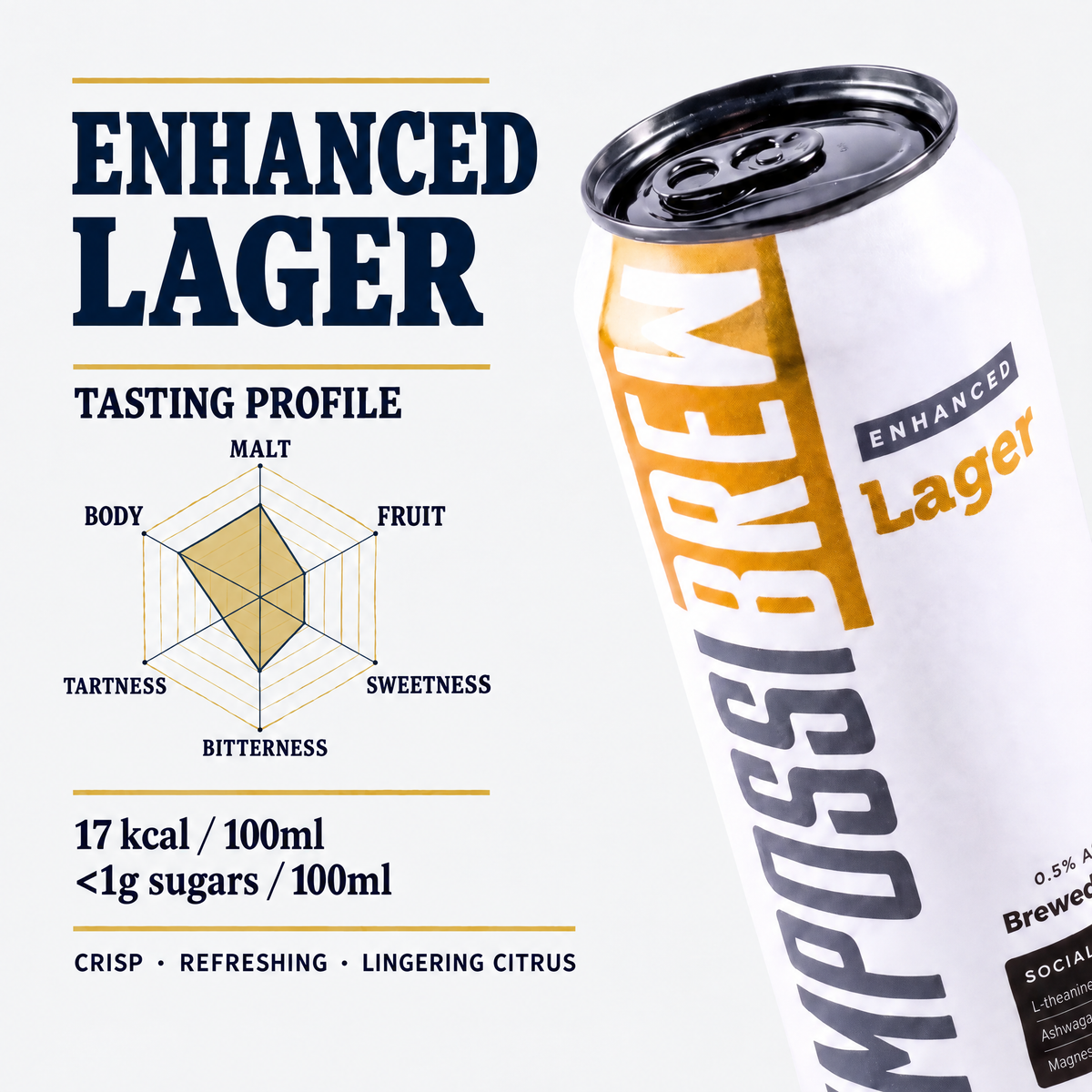
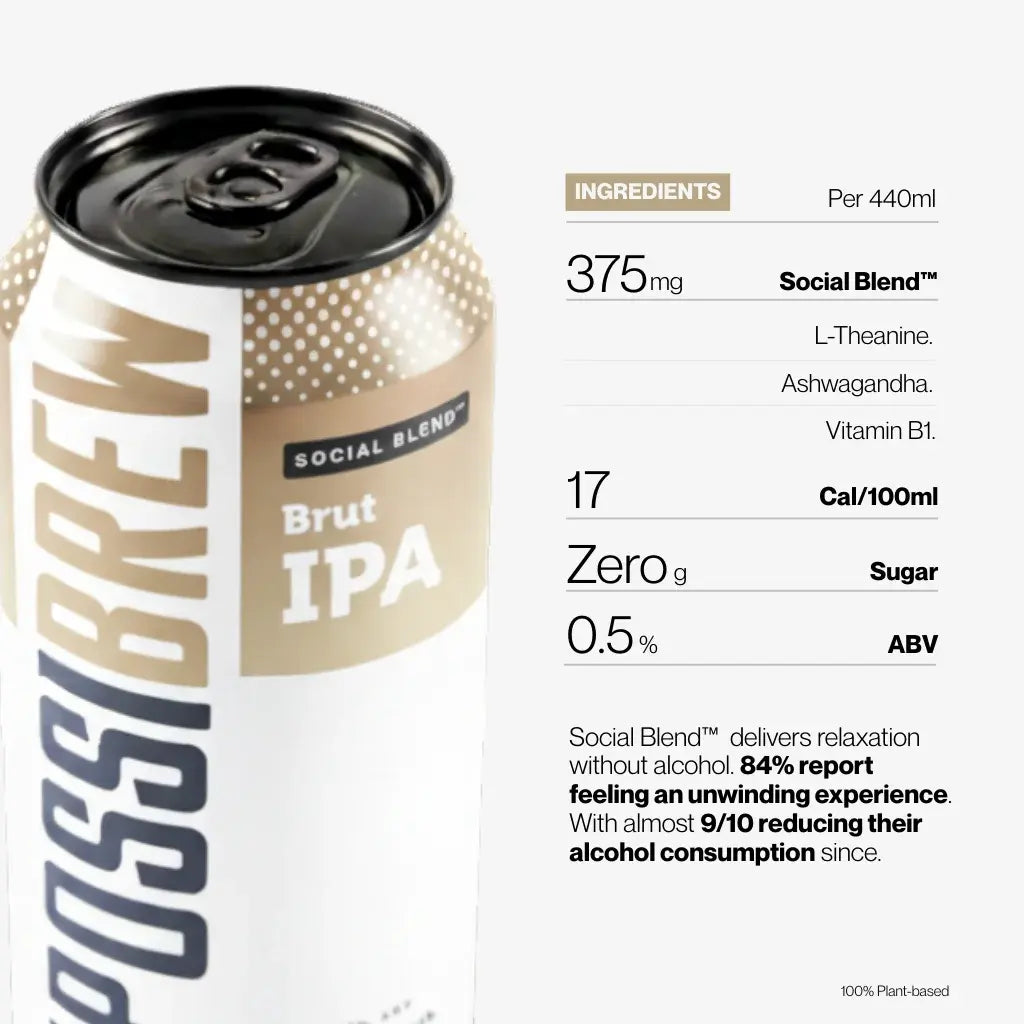
IMPOSSIBREW® Enhanced Lager strikes an impressive balance when it comes to calorie content and sugar levels. With 17 kcal per 100 ml (around 75 calories per 440ml can) and just 0.7g of sugar per 100 ml, it stands out as a lighter option among alcohol-free choices[7][9]. These calories primarily come from 3.4g of carbohydrates per 100 ml, derived from malted barley and wheat[7][9].
Calorie Content (per 100 ml)
The lager contains 17 kcal per 100 ml, adding up to approximately 75 calories per 440ml can[8].
Sugar Content (per 100 ml)
With a sugar content of only 0.7g per 100 ml, it offers a much lower sugar level compared to many other alcohol-free drinks[7][9].
ABV (Alcohol by Volume)
Thanks to controlled fermentation, this lager maintains a 0.5% ABV, which contributes negligible calories - similar to the trace amounts found in ripe bananas or burger rolls[7][9].
Special Features
IMPOSSIBREW® Enhanced Lager is not just about taste and nutrition - it’s gluten-free (tested to less than 10 parts per million) and 100% vegan[7][9]. What truly sets it apart is its proprietary Social Blend™, a carefully crafted mix of L-theanine, Ashwagandha root extract, and Vitamin B1, designed to mimic the relaxing effects of alcohol.
This lager has earned recognition for its quality, taking home the title of "UK's Best Tasting Alcohol-Free Lager" at the World Beer Awards 2023[9][11], along with a Gold Medal at the London Beer Competition[7].
Next, we’ll dive into another variant of IMPOSSIBREW® with its own unique nutritional highlights.
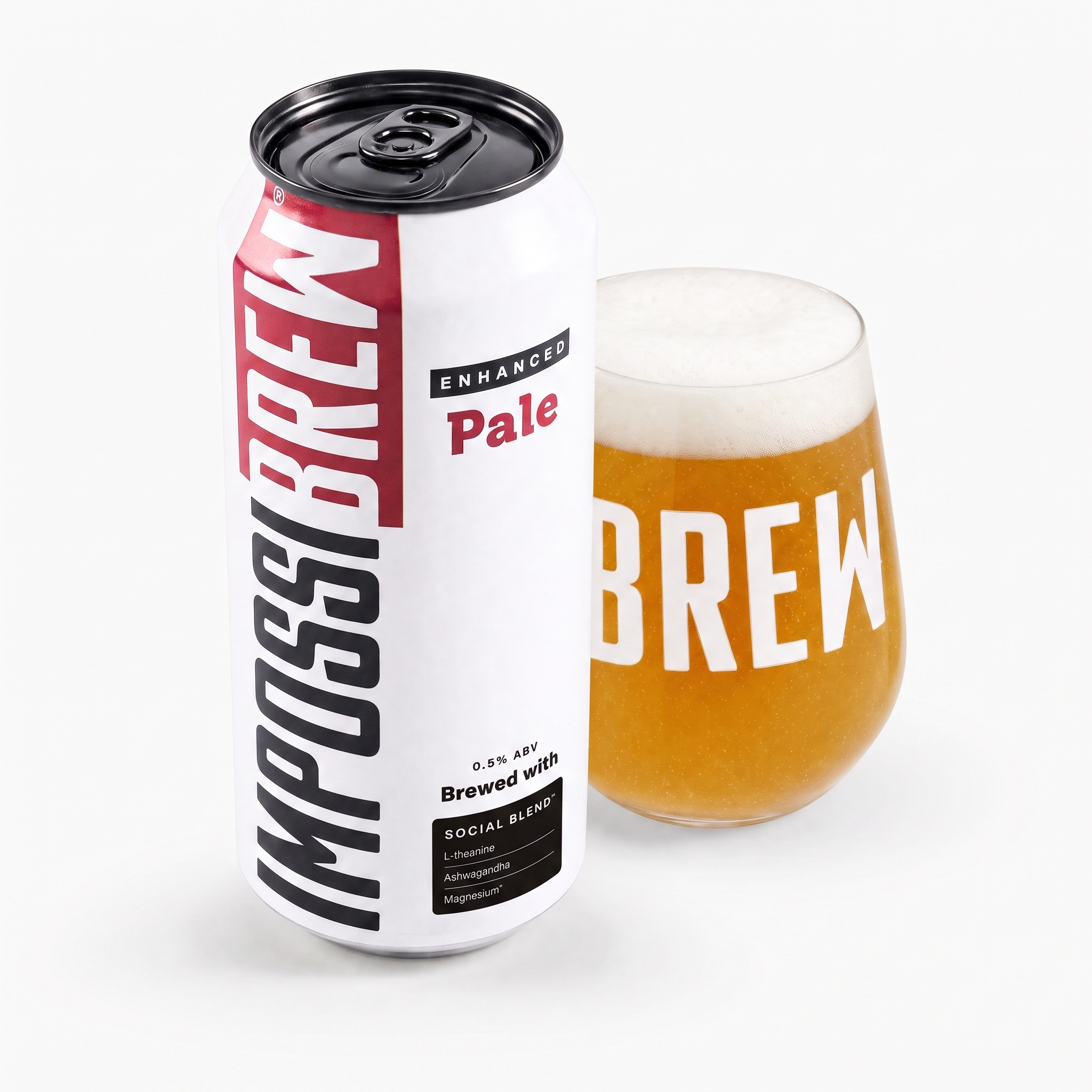
2. IMPOSSIBREW® Enhanced Hazy Pale
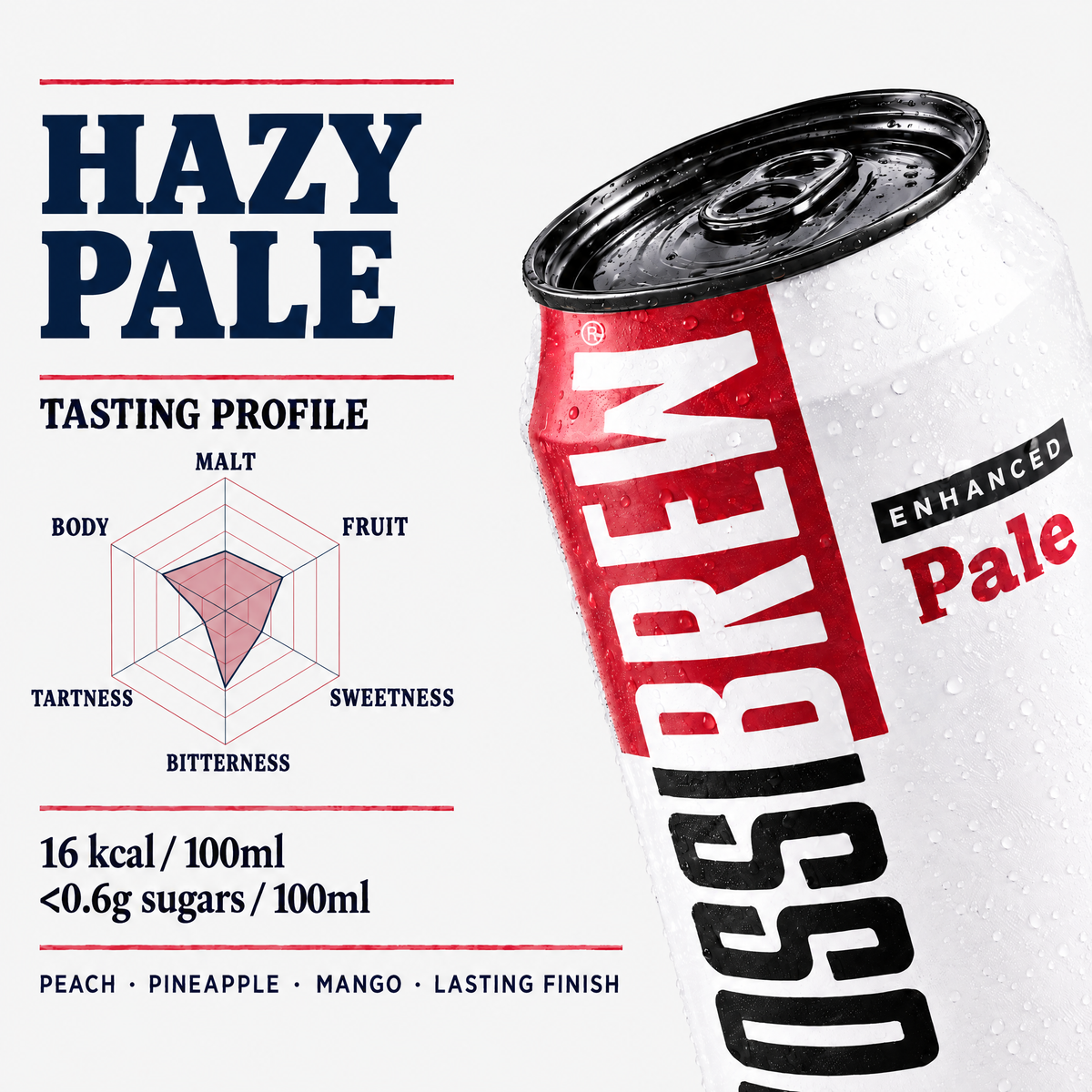
IMPOSSIBREW® Enhanced Hazy Pale is a lighter choice compared to the lager, offering just 16 kcal per 100 ml (around 70 calories for a 440 ml can) and only 0.6g of sugar per 100 ml. Designed with a tropical, fruity flavour, it’s ideal for those balancing taste with health-conscious goals. Its energy content comes from 3.0g of carbohydrates per 100 ml, sourced from malted barley, wheat, oats, and rye [7][12].
Calorie Content (per 100 ml)
At just 16 kcal per 100 ml, this hazy pale ranks as one of the lower-calorie alcohol-free beers available [7][12].
Sugar Content (per 100 ml)
The beer contains only 0.6g of sugar per 100 ml, reinforcing its position as a low-calorie option [12].
ABV (Alcohol by Volume)
With an ABV of 0.5%, the Enhanced Hazy Pale has a trace amount of alcohol, comparable to the levels naturally found in some fruits [7][13].
Special Features
This beer is made from malted barley, wheat, oats, and rye, making it 100% vegan. It also includes the brand’s proprietary Social Blend™ (375mg per 100 ml), which combines L-theanine, Ashwagandha root extract, and Vitamin B1 [7][12]. Rated 4/5 by Alcohol Change UK, it’s celebrated for its "thicker, more enjoyable mouthfeel" and vibrant citrus, pineapple, mango, and peach notes [13].
"This pale ale is packed full of hops... It has a good body to it and a thicker more enjoyable mouthfeel than most alcohol-free beers."
– Henry Forrest, Alcohol-Free Explorers [13]
In a survey of over 1,000 participants, more than 70% reported feeling relaxed after consuming IMPOSSIBREW® products, and 88% noted a reduction in their overall alcohol intake [7].
Next, we’ll take a look at another alcohol-free beer and its nutritional details.
3. Beck's Blue
For those keeping an eye on their calorie intake, Beck's Blue offers a refreshing solution. This de-alcoholised German pilsner provides a satisfying drink with significantly fewer calories than its alcoholic counterpart. Crafted under the Reinheitsgebot (German Purity Law of 1516), it uses only four ingredients: water, barley malt, hops, and yeast. Each 100 ml contains just 14 kcal, translating to approximately 46 kcal in a standard 330 ml bottle [14][16].
Calorie Content (per 100 ml)
With only 14 kcal per 100 ml, a 275 ml bottle comes in at about 39 kcal. To put that into perspective, this is less than half the 92 kcal found in a regular Beck's beer [15].
Sugar and Carbohydrate Content
Beck's Blue keeps sugar levels impressively low, with just 0.2 g per 100 ml. The calorie count primarily comes from its carbohydrate content, which stands at 3.1 g per 100 ml [14].
Alcohol by Volume (ABV)
The de-alcoholisation process used to produce Beck's Blue ensures an ABV between 0.03% and less than 0.05%, making it a near-zero alcohol option [18][20].
Special Features
Beck's Blue is a vegan-friendly choice, as confirmed by its manufacturer, AB InBev. No animal products or derivatives are involved in its production [19]. However, it does contain gluten due to the barley used, making it unsuitable for those with coeliac disease or gluten sensitivities. Additionally, the beer is both palm oil-free and fat-free.
The next section delves into further comparisons of alcohol-free beers.
4. Peroni Libera
Peroni Libera offers a crisp, Italian-inspired option with 47% fewer calories than regular Peroni Lager. Brewed at 0.0% ABV, it uses a triple-hopped process combined with Italian Nostrano dell’Isola maize, resulting in a refined flavour profile. In 2019, it became the UK’s best-selling new beer product [25].
Calorie Content (per 100 ml)
Each 100 ml of Peroni Libera contains 22 kcal, meaning a standard 330 ml bottle delivers approximately 73 kcal. This is a significant reduction compared to a regular 330 ml bottle of Peroni Lager, which contains 139 kcal [22][23].
Sugar and Carbohydrate Content (per 100 ml)
The beer includes 3.0 g of sugar per 100 ml, equating to about 10 g in a 330 ml bottle. Its total carbohydrate content is 5.3 g per 100 ml [21][24].
Alcohol by Volume (ABV)
Peroni Libera is entirely alcohol-free, with an ABV of 0.0% [23].
Special Features
While many alcohol-free beers cater to gluten-free and vegan preferences, Peroni Libera contains barley malt and is not vegan-friendly. On the plus side, it’s fat-free (0.0 g per 100 ml) and has been recognised for its crisp, refreshing taste without any metallic aftertaste. This makes it an excellent pairing for Italian dishes [25]. Its reduced calorie content also appeals to those mindful of their intake. Next, we’ll explore more nutritional profiles to provide a broader comparison of alcohol-free beer options.
5. Heineken 0.0
Heineken 0.0 stands out as a popular alcohol-free beer for weight loss, crafted using a double-brewing process to preserve its distinct taste. Created over several years by expert brewers, it uses natural ingredients and Heineken's signature "A-Yeast" to achieve refreshing fruity notes with a smooth, malty finish [27]. Here's a closer look at its nutritional details.
Calorie Content (per 100 ml)
With just 21 kcal per 100 ml, a standard 330 ml bottle or can has around 69 calories. This makes it about 36% lighter in calories compared to regular lagers like Beck's German Pilsner, which typically contains 33 kcal per 100 ml [17][26][27].
Sugar and Carbohydrate Content (per 100 ml)
Heineken 0.0 contains 1.3 g of sugar per 100 ml, translating to roughly 4.3 g in a 330 ml serving. Total carbohydrates are 4.8 g per 100 ml, accounting for about 94% of its calorie content [27][29].
Alcohol by Volume (ABV)
Although labelled as 0.0% ABV, technical specifications reveal a trace amount of 0.05% ABV, comparable to levels found in some everyday foods [28].
Special Features
This beer is suitable for vegetarians but not for gluten-free diets due to its malted barley content. It's fat-free, contains minimal salt (<0.01 g per 100 ml), and enjoys strong customer reviews, scoring 4.8/5 at ASDA and 4.6/5 at Morrisons. A 12-pack of 330 ml bottles is typically priced between £9.93 and £11.50 [27][28].
6. Budweiser Zero
Let’s take a closer look at Budweiser Zero, a low-calorie, alcohol-free lager with a refreshing taste and an interesting nutritional profile. Designed to deliver a crisp flavour without any alcohol, it’s brewed with water, barley malt, rice, hops, and yeast, staying true to the classic lager experience [32] [34] [35] [36].
Calorie Content (per 100 ml)
Budweiser Zero stands out with 14 kcal per 100 ml, making it one of the lightest options in the alcohol-free beer market. A standard 330 ml bottle contains around 46 calories, keeping it a great choice for those watching their calorie intake [30] [31].
Sugar and Carbohydrate Content (per 100 ml)
While advertised as "zero sugar", it does contain trace amounts - about 0.1 g per 100 ml [1] [3]. The carbohydrate content totals 3.3 g per 100 ml, which is where most of its calories come from [1] [30].
Special Features
Budweiser Zero is completely alcohol-free, with 0.0% ABV, and is suitable for vegans [1] [3] [31]. However, due to the presence of barley malt, it’s not gluten-free [32] [33]. The inclusion of rice in the brewing process is a nod to the brand’s tradition, lending a crisp finish while keeping the calorie count low [35] [37]. This combination of features highlights the variety of choices available in alcohol-free beers, catering to diverse preferences and dietary needs.
Advantages and Disadvantages
When considering alcohol-free beers, it’s a balancing act between cutting down on calories and dealing with increased sugars and flavour differences. Let’s break it down.
One of the biggest perks of alcohol-free beer is the calorie savings. Alcohol itself packs 7 calories per gram, so removing it can slash calorie counts by an average of 44% [3]. For instance, regular Heineken (5%) has 42 kcal per 100 ml, while Heineken 0.0 drops to just 21 kcal per 100 ml [3].
But here’s the catch: while alcohol-free options are lighter on calories, they often come with higher sugar and carbohydrate levels. This happens because fermentation is stopped early or restricted, leaving behind residual sugars [1]. Take Peroni, for example - its regular version (5.1%) has 0 g of sugar, but Peroni Libera (0%) contains 3.0 g per 100 ml [3]. A single pint of a sugary alcohol-free beer can contribute nearly two-thirds of the NHS’s recommended daily limit of 30 g for free sugars [1].
"Alcohol-free beers are also often higher in carbs and sugar... unlike most alcoholic beers – they usually contain sugar." - Tom Hallett, Founder, Steady Drinker [1]
Another downside? Flavour can take a hit. Alcohol helps carry aromas and adds depth, so without it, some alcohol-free beers can taste flat or watery [39]. Brands like IMPOSSIBREW® aim to tackle this problem with specialised brewing techniques and functional ingredients, but not every alcohol-free beer manages to deliver the same richness.
Here’s a quick comparison of some popular options:
| Product | Calories (per 100 ml) | Sugar (g per 100 ml) | Key Features |
|---|---|---|---|
| IMPOSSIBREW® Enhanced Lager | 16 | 0 | Social Blend™ (L-Theanine, Ashwagandha), Gluten-Free, Vegan [10] |
| IMPOSSIBREW® Enhanced Hazy Pale | 16 | 0 | Social Blend™, Vegan, proprietary relaxation technology [10] |
| Beck's Blue | 13–14 | 0.2 | Low calorie, fat-free, widely available [1][3] |
| Peroni Libera | 22 | 3.0 | 0.0% ABV, Italian lager flavour [1][3] |
| Heineken 0.0 | 21 | 1.3 | 0.05% ABV, widely available [3] |
| Budweiser Zero | 14 | 0.1 | 0.0% ABV, low sugar [3] |
| Regular Lager (Avg. 5%) | 42–45 | 0 | Contains alcohol (7 kcal/g), usually sugar-free [1][3] |
It’s also worth noting that the term "alcohol-free" in the UK can legally include up to 0.5% ABV [38]. While this is minimal - comparable to what you’d find in a ripe banana - it might not work for everyone, especially those avoiding alcohol for medical or religious reasons. If you need a completely alcohol-free option, look for labels that say "0.0%."
These pros and cons paint a clearer picture of the nutritional trade-offs, setting the stage for further discussion.
Conclusion
Alcohol-free beer stands out as a lower-calorie alternative to its regular counterpart, thanks to the absence or reduction of alcohol, which contains about 7 calories per gram [4]. By making the switch, you can cut calorie intake by around 44%. For example, a typical 330 ml bottle drops from roughly 150 calories to about 70 calories [3].
There are plenty of low-calorie options on the market, such as Beck's Blue (around 13–14 kcal per 100 ml) and Budweiser Zero (approximately 14 kcal per 100 ml) [1] [10]. However, it’s worth noting that alcohol-free beers often have higher carbohydrate and residual sugar levels due to limited fermentation [1]. For instance, Peroni Libera contains about 22 kcal per 100 ml and 3.0 g of sugar, whereas regular beers typically contain little to no residual sugars. If you're watching your carbohydrate intake, look for drier styles that prioritise bitterness over sweetness [5].
For those focused on weight management or fitness, alcohol-free beer serves as a practical social alternative. It offers a satisfying drink option without the liver strain or sleep disturbances sometimes linked to regular beer [5]. While these beverages are lower in calories than many soft drinks - orange juice, for instance, has about 46 kcal per 100 ml compared to the 10–35 kcal per 100 ml range for alcohol-free beers - they’re not calorie-free. They should complement, not replace, water or nutrient-rich drinks in a balanced diet [1].
In the UK, drinks with an ABV of 1.2% or less must display full nutritional information, making it easier to choose options that align with a health-conscious lifestyle [4]. By understanding where the calories in your drink come from, you can make informed choices without sacrificing the enjoyment of social occasions.
FAQs
Is alcohol-free beer fattening?
Alcohol-free beer typically has fewer calories than regular beer because it contains little to no alcohol, which is high in calories. That said, it’s not entirely calorie-free. Many alcohol-free beers still include sugars and carbohydrates, which can add to your overall calorie intake. While it’s a lighter choice for those looking to cut calories, drinking it in large quantities or opting for brands with extra sugars can still contribute to weight gain. As with most things, moderation makes all the difference.
Can alcohol-free beer spike blood sugar?
Yes, alcohol-free beer can lead to blood sugar spikes because of the residual sugars and carbohydrates it contains. A typical 330ml serving often has around 50–80 calories, primarily from simple sugars and malt, which can quickly influence blood sugar levels. On top of that, some ingredients or artificial sweeteners in these beers might affect how insulin works or even influence appetite. For anyone managing their blood sugar, it’s important to keep an eye on their intake and review the carbohydrate content of specific brands.
What should I check on the label?
When you're checking the label on alcohol-free beer, pay attention to the calorie content per serving - it can differ significantly between brands. Take a look at the amount of residual sugars and carbohydrates, as these are key contributors to the calorie count. Also, don't overlook the alcohol by volume (ABV); even small traces of alcohol can influence the overall calorie numbers. By reviewing these details, you can pick an option that fits better with your health and wellness goals.